5G mmWave Transforms Mobile AR in US Cities: Q2 2026 Update
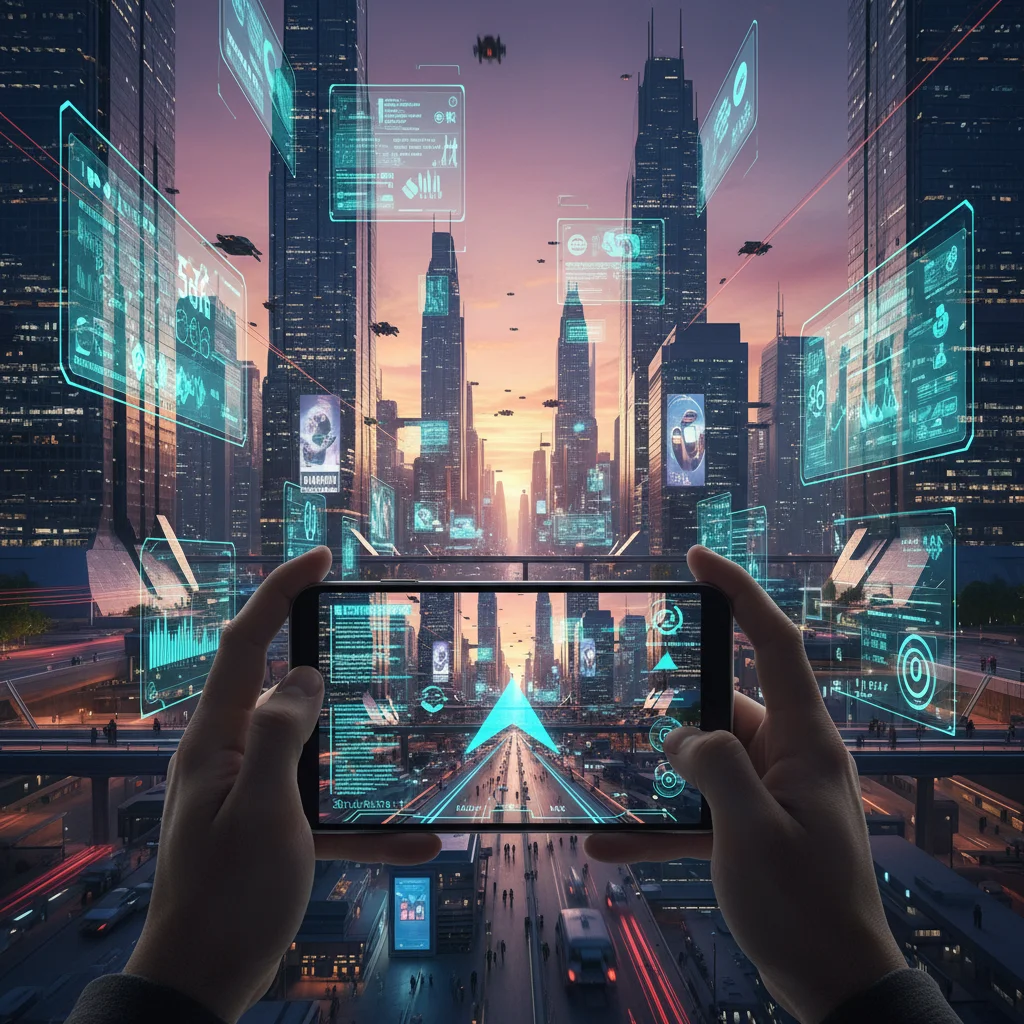
How 5G mmWave Expansion in US Cities is Revolutionizing Mobile AR Experiences: A Q2 2026 Update
The landscape of mobile technology is constantly evolving, but few advancements hold as much transformative power as the widespread adoption of 5G mmWave. As of Q2 2026, the expansion of 5G mmWave AR capabilities across major US cities is not just an incremental upgrade; it is fundamentally reshaping how we interact with our digital and physical worlds through Augmented Reality (AR). This high-frequency spectrum, once a niche technology, is now becoming the backbone for truly immersive, real-time mobile AR experiences, promising a future where the lines between the virtual and the real are increasingly blurred.
For years, the promise of AR has captivated imaginations, but its full potential has been constrained by network limitations. Standard 4G LTE and even early 5G deployments, while fast, often struggled with the massive data throughput and ultra-low latency required for truly seamless and interactive AR. Enter 5G mmWave – a game-changer that delivers unparalleled speeds and minimal latency, making complex AR applications viable on mobile devices. This article delves into the current state of 5G mmWave AR in US cities, exploring its impact, the challenges overcome, and the exciting possibilities it unlocks for consumers and industries alike.
The Technical Advantage: Why 5G mmWave is Crucial for Mobile AR
To understand the revolution in mobile AR, one must first grasp the distinct advantages of 5G mmWave over other cellular technologies. Millimeter wave (mmWave) refers to the higher frequency bands of the 5G spectrum, typically ranging from 24 GHz to 100 GHz. While these frequencies have a shorter range and are more susceptible to obstruction than lower frequency bands, their capacity for data transmission is exponentially greater.
Unprecedented Speed and Bandwidth
The most immediate benefit of 5G mmWave is its incredible speed. We’re talking multi-gigabit per second download and upload speeds, far exceeding what’s achievable with sub-6 GHz 5G or 4G LTE. For mobile AR, this means that highly detailed 3D models, complex environmental scans, and rich interactive content can be streamed to devices in real-time without buffering or lag. Imagine walking through a city and having high-fidelity architectural renderings or historical reconstructions instantly rendered over existing buildings, all without a hitch. This level of detail and responsiveness is simply not possible without the massive bandwidth provided by 5G mmWave AR.
Ultra-Low Latency: The Key to Immersive AR
Beyond speed, latency is arguably the most critical factor for truly immersive AR. Latency refers to the delay between when a signal is sent and when it is received. In AR, high latency can lead to a disorienting experience, where virtual objects appear to lag behind real-world movements or fail to integrate smoothly into the environment. 5G mmWave boasts ultra-low latency, often in the single-digit millisecond range. This near-instantaneous response time is crucial for:
- Realistic Object Persistence: Virtual objects stay firmly anchored in the real world, even as the user moves their device or head.
- Real-time Interaction: User inputs, such as gestures or taps, are reflected immediately in the AR environment, making interactions feel natural and intuitive.
- Multiplayer AR Experiences: Multiple users can share and interact within the same AR space with perfect synchronization, opening doors for collaborative gaming, education, and professional applications.
Without this ultra-low latency, mobile AR remains largely a novelty. With 5G mmWave AR, it becomes a powerful tool and an engaging entertainment platform.
Current Expansion and Adoption in US Cities (Q2 2026)
As of Q2 2026, the deployment of 5G mmWave infrastructure has seen significant acceleration across major metropolitan areas in the United States. While initial rollout was concentrated in dense urban cores and specific venues, carriers have made substantial progress in expanding coverage to more neighborhoods, business districts, and even some transportation hubs. Cities like New York, Los Angeles, Chicago, Miami, and Dallas continue to lead in terms of mmWave availability, with increasing penetration in other top-tier and even some second-tier cities.
Strategic Deployment by Carriers
Major US carriers have adopted varied strategies for mmWave deployment. Some have focused on creating ‘hot zones’ – areas with extremely high data traffic – to offload congestion and showcase the technology’s capabilities. Others are strategically deploying mmWave nodes around key landmarks, entertainment venues, and commercial centers to enhance specific AR experiences. The increasing availability of smaller, more discreet mmWave antennas has also facilitated denser deployments, allowing for more pervasive coverage in targeted areas.
Increased Device Penetration
The proliferation of 5G mmWave-capable smartphones and other mobile devices has also been a critical factor. By Q2 2026, most flagship and even many mid-range smartphones from leading manufacturers now include full 5G mmWave support. This widespread device penetration means that a growing percentage of the mobile user base can actually leverage the enhanced capabilities of 5G mmWave AR, driving demand for more sophisticated applications.
Public and Private Partnerships
To overcome the challenges of mmWave deployment, particularly its susceptibility to obstacles, there has been an increase in public-private partnerships. City governments are collaborating with carriers to streamline permitting processes for small cell installations, while private enterprises are investing in indoor mmWave solutions for offices, retail spaces, and entertainment complexes. This collaborative effort is essential for creating the dense network required for ubiquitous 5G mmWave AR experiences.
Revolutionary Mobile AR Applications Powered by 5G mmWave
The enhanced capabilities of 5G mmWave AR are not just theoretical; they are manifesting in a new generation of applications that were previously impossible or severely limited. These applications span a wide array of sectors, transforming how we work, learn, play, and navigate our world.
Immersive Gaming and Entertainment
Mobile AR gaming is perhaps the most visible beneficiary. With 5G mmWave, games can feature console-quality graphics rendered in real-time, complex physics, and large-scale multiplayer interactions seamlessly overlaid onto the real world. Imagine participating in a massive virtual battle unfolding in a public park, with hundreds of players interacting with highly detailed digital characters and environments, all synchronized with ultra-low latency. Entertainment experiences extend to live events, where fans can view real-time statistics, player perspectives, or even holographic replays overlaid onto the stadium field or concert stage.

Enhanced Navigation and Urban Exploration
Traditional navigation apps provide directions, but 5G mmWave AR takes this to a new level. Users can hold up their phone and see dynamic, animated arrows and points of interest overlaid directly onto the live camera feed of the street. This isn’t just about finding the shortest route; it’s about discovering hidden gems, historical facts, or interactive art installations that appear only when viewed through an AR lens. Tourists can experience ‘time travel’ AR, seeing historical events unfold directly on the sites where they happened, with incredible detail and historical accuracy.
Retail and E-commerce Reinvented
The retail sector is also undergoing a significant transformation. Customers can use mobile AR to virtually try on clothes, place furniture in their homes before purchasing, or see detailed information about products simply by pointing their phone at them in a store. 5G mmWave ensures these virtual try-ons are hyper-realistic and instantaneous, reducing buyer’s remorse and enhancing the shopping experience. Retailers are also leveraging AR for dynamic digital signage and interactive storefronts that adapt to individual customer preferences in real-time.
Industrial and Enterprise Applications
Beyond consumer applications, 5G mmWave AR is proving invaluable in enterprise settings. Field service technicians can receive real-time holographic instructions overlaid on complex machinery, guiding them through repairs or maintenance tasks. Architects and construction workers can visualize building plans and structural elements directly on a job site, facilitating collaboration and reducing errors. Medical professionals can use AR for remote assistance during surgeries or for training purposes, with high-fidelity 3D models and real-time data streaming.
Educational and Training Tools
Education is another sector ripe for disruption. Students can explore interactive 3D models of human anatomy, historical artifacts, or complex scientific phenomena right in their classrooms or homes. Remote learning can become vastly more engaging, with virtual classrooms where students and teachers interact with digital content in a shared AR space, all powered by the robust connectivity of 5G mmWave.
Challenges and Solutions in 5G mmWave AR Deployment
While the benefits are clear, the expansion of 5G mmWave AR has not been without its challenges. Understanding these hurdles and the innovative solutions being implemented provides a clearer picture of the technology’s trajectory.
The "Line-of-Sight" Conundrum
One of the primary challenges of mmWave frequencies is their susceptibility to physical obstructions. Buildings, trees, and even heavy rain can degrade or block the signal. This requires a much denser network of small cells compared to lower frequency bands. To combat this, carriers are deploying a multitude of miniature base stations, often integrated into streetlights, utility poles, and building facades. Advanced beamforming and beam-tracking technologies are also crucial, allowing mmWave antennas to dynamically direct narrow, powerful beams of signal directly at user devices, circumventing some obstructions and maintaining connectivity.
Indoor Penetration
Getting mmWave signals indoors is another significant hurdle. Traditional building materials can severely attenuate the signal. Solutions include strategically placed indoor small cells, often integrated into existing Wi-Fi networks, and the development of specialized window films or repeaters that allow mmWave signals to penetrate buildings more effectively. The focus is on creating seamless indoor-outdoor AR experiences, especially in public venues like malls, airports, and sports arenas.
Energy Consumption and Device Thermals
Processing complex AR content and maintaining high-speed 5G mmWave connections can be demanding on device batteries and can generate significant heat. Smartphone manufacturers are continuously improving battery efficiency and developing more advanced thermal management systems. Furthermore, edge computing – processing AR data closer to the user on local servers rather than sending it all to the cloud – helps reduce the computational load on devices and minimizes latency, making 5G mmWave AR more sustainable for mobile use.

The Future of Mobile AR with 5G mmWave Beyond Q2 2026
Looking beyond Q2 2026, the trajectory for 5G mmWave AR is one of continued growth and increasing sophistication. Several key trends and developments are expected to shape its future.
Pervasive Urban AR Layers
As mmWave coverage becomes even more ubiquitous in US cities, we can anticipate the emergence of persistent, city-wide AR layers. These layers will allow users to access context-aware digital information and experiences seamlessly across different locations. Imagine an entire city becoming an interactive canvas, with real-time public art installations, historical narratives, or even dynamic advertising that changes based on your location and preferences.
Integration with Wearable AR Devices
While smartphones are the primary interface for mobile AR today, the future will increasingly involve lightweight, stylish AR glasses. 5G mmWave will be essential for these devices, providing the low-latency, high-bandwidth connection needed to stream rich visual information directly to the wearer’s field of view without a tether. This will allow for truly hands-free and more natural AR interactions, blurring the lines between the digital and physical even further.
AI and Spatial Computing Synergy
The combination of 5G mmWave AR with advanced Artificial Intelligence (AI) and spatial computing will unlock unprecedented capabilities. AI will enable AR systems to better understand the user’s environment, predict intentions, and deliver highly personalized experiences. Spatial computing, which allows digital content to understand and interact with the real world, will make AR objects even more realistic and interactive. This synergy will lead to AR experiences that are not just overlaid but deeply integrated and intelligent.
New Business Models and Economic Opportunities
The revolution in mobile AR driven by 5G mmWave will also spawn entirely new business models and economic opportunities. From AR content creation studios and specialized AR advertising platforms to new forms of location-based entertainment and industrial training solutions, the economic impact will be substantial. Cities themselves may become more attractive to businesses and tourists due to their advanced AR capabilities.
Conclusion: A New Era of Interaction
The expansion of 5G mmWave in US cities by Q2 2026 marks a pivotal moment for mobile Augmented Reality. What was once a futuristic concept is rapidly becoming a practical, powerful, and pervasive technology. The unparalleled speed and ultra-low latency of 5G mmWave are not merely improving existing AR applications; they are enabling entirely new categories of experiences that were previously unimaginable on mobile devices.
From transforming entertainment and retail to revolutionizing navigation, education, and industrial processes, the impact of 5G mmWave AR is profound and far-reaching. While challenges related to coverage and device efficiency persist, ongoing innovation and strategic deployment are steadily overcoming these hurdles. As the infrastructure continues to mature and AR hardware evolves, we are on the cusp of an era where our digital lives will seamlessly merge with our physical surroundings, creating a richer, more interactive, and more informed reality for everyone in connected US cities.
The future is here, and it’s augmented by 5G mmWave. Get ready to experience your world in an entirely new dimension.