Haptic Feedback Innovations: US Mobile Gaming 2026 Deep Dive
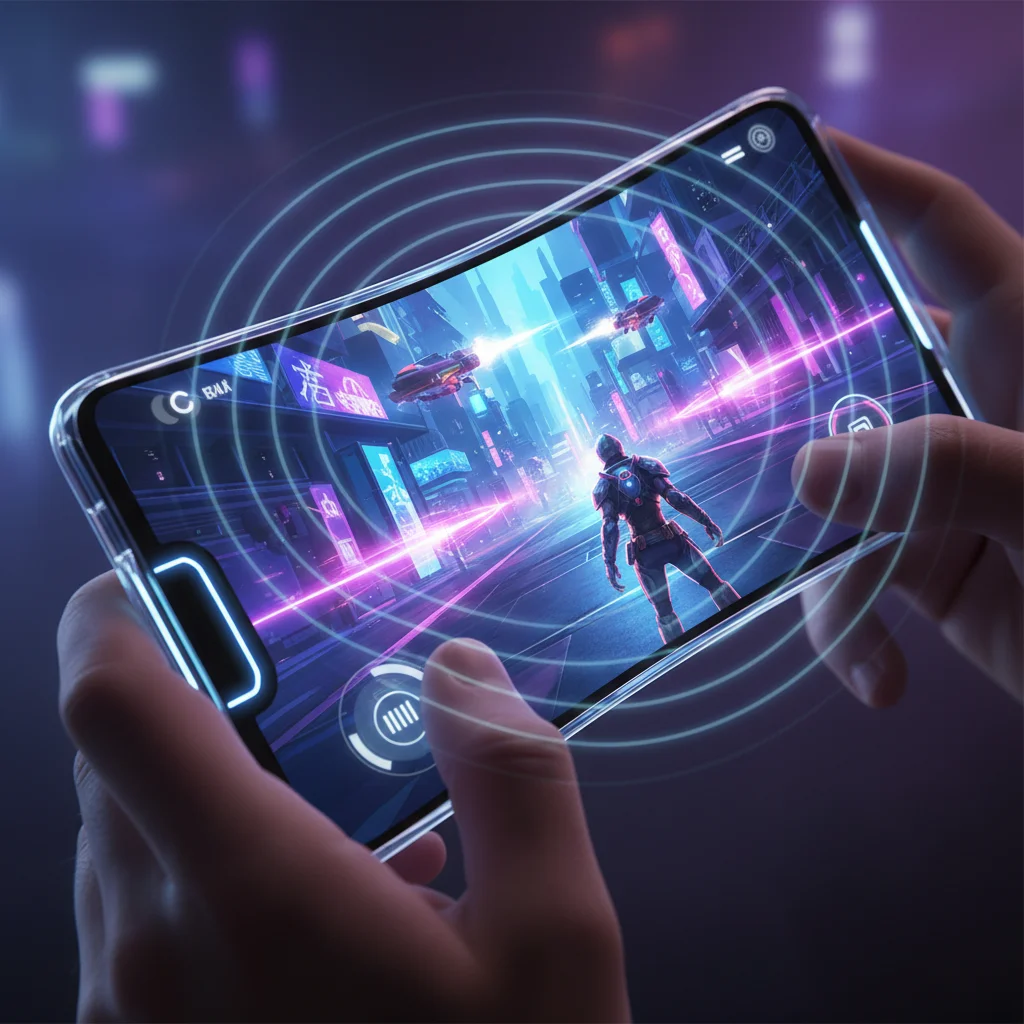
The landscape of mobile gaming is perpetually evolving, pushing the boundaries of what’s possible on a handheld device. While stunning graphics and intricate narratives have long been pillars of immersion, a new frontier is rapidly gaining prominence: haptic feedback. By 2026, the United States mobile gaming market is poised for a revolution in tactile sensation, moving far beyond simple buzzing to deliver rich, nuanced, and deeply immersive experiences. This article delves into six groundbreaking mobile gaming haptics innovations that are set to redefine how we play, feel, and interact with our favorite mobile titles.
For years, haptic feedback in mobile devices was largely rudimentary – a basic vibration signaling a notification or a button press. However, advancements in actuator technology, software algorithms, and a deeper understanding of human perception are transforming this once-simple feature into a sophisticated tool for storytelling and gameplay. The goal is no longer just to inform, but to immerse, to create a tangible connection between the digital world on screen and the physical sensations in our hands. This evolution of mobile gaming haptics is not merely an enhancement; it’s a fundamental shift in how we perceive and engage with interactive entertainment.
The upcoming innovations are not singular breakthroughs but rather a confluence of technological progress across various disciplines. From miniaturized actuators capable of producing a wider range of frequencies and amplitudes to sophisticated software that can dynamically adapt haptic patterns to in-game events, the future of mobile gaming promises a multi-sensory feast. Developers are increasingly recognizing the power of touch to evoke emotion, convey information, and heighten realism, making haptics an indispensable element in crafting truly compelling mobile experiences. Let’s explore the leading innovations set to make waves in the US mobile gaming scene by 2026.
1. High-Definition Haptics: Beyond Basic Vibrations
One of the most significant strides in mobile gaming haptics is the advent of high-definition (HD) haptics. Traditional haptic feedback relies on eccentric rotating mass (ERM) motors, which produce a single, often buzzy, vibration. HD haptics, on the other hand, utilize linear resonant actuators (LRAs) or piezoelectric actuators, capable of generating a much broader spectrum of frequencies and amplitudes. This allows for the creation of intricate and distinct tactile sensations.
Imagine feeling the distinct recoil of different firearms in a first-person shooter, differentiating between the gentle patter of rain and the heavy thud of footsteps, or experiencing the subtle texture of various surfaces as your character traverses a virtual environment. HD haptics make this possible. By precisely controlling the timing, intensity, and frequency of vibrations, developers can craft highly localized and nuanced effects that mimic real-world sensations with remarkable accuracy. This level of fidelity means that a delicate touch can feel different from a firm press, a smooth surface distinct from a rough one, and a sudden impact can be felt with visceral realism.
The impact on mobile gaming immersion is profound. Instead of a generic buzz for every event, players will receive tailor-made tactile cues that enhance situational awareness and emotional engagement. This is particularly crucial for games where audio and visual cues alone might not fully convey the necessary information or impact. HD haptics can communicate a sense of weight, momentum, and material properties, adding an entirely new layer of realism. Furthermore, this technology opens doors for accessibility, providing alternative feedback mechanisms for players with visual or auditory impairments, allowing them to experience the game world through touch.
The challenge for developers lies in mastering the art of haptic design, ensuring that these sensations are not just technically impressive but also meaningfully integrated into gameplay. As more flagship smartphones adopt advanced LRA and piezoelectric technologies, and as haptic SDKs become more sophisticated, HD haptics will become a standard expectation, elevating the entire mobile gaming experience. The ability to convey subtle details through touch provides an unparalleled level of immersion, making games more believable and engaging. This innovation alone is set to dramatically alter the landscape of mobile gaming haptics, setting a new benchmark for interactive experiences.
2. Spatially Aware Haptics: Pinpointing Sensations
Beyond simply improving the quality of vibrations, spatially aware haptics aim to localize these sensations to specific areas of the device. Current mobile haptics often feel like a general vibration across the entire phone. Spatially aware systems utilize multiple, strategically placed actuators, allowing developers to create the illusion that a haptic effect is originating from a particular part of the screen or device.
Consider a game where a character takes damage from the left. With spatially aware haptics, you might feel a distinct vibration on the left side of your phone, providing an intuitive directional cue. In a puzzle game, interactable elements could provide localized feedback when touched, guiding the player’s finger or confirming a successful interaction. This capability adds a layer of realism and intuitive feedback that was previously impossible, transforming the phone from a monolithic vibration source into a dynamic canvas of tactile information.
This innovation is particularly impactful for games that rely on directional cues, such as racing games where collisions can be felt on the side of impact, or strategy games where unit movements or attacks can be mapped to specific screen regions. It enhances a player’s ability to react quickly and accurately, as the tactile information directly corresponds to events happening in a specific visual area. The precision offered by spatially aware haptics means that a game can communicate not just ‘something happened,’ but ‘something happened here,’ significantly reducing cognitive load and improving response times.
Implementing spatially aware haptics requires careful engineering, both in terms of hardware (more actuators in precise locations) and software (algorithms to control these actuators independently and synchronously). As device manufacturers integrate more advanced haptic arrays, game developers will gain powerful new tools to design experiences that are not only visually and audibly engaging but also physically responsive and informative. This will lead to a more intuitive and less abstract interaction with the game world, blurring the lines between the digital and physical. The future of mobile gaming haptics hinges on such precise and localized feedback, making every interaction more meaningful.
3. Haptic Storytelling and Emotional Resonance
One of the most exciting, yet subtle, applications of advanced mobile gaming haptics is in storytelling and evoking emotional resonance. Beyond literal feedback for in-game events, haptics can be designed to convey mood, tension, or even character emotions. Imagine a game where a character’s fear is subtly communicated through a rapid, shallow vibration, or a moment of triumph is underscored by a deep, resonant pulse.
This goes beyond simple notifications and delves into the realm of artistic expression. By carefully crafting haptic patterns – varying frequency, intensity, duration, and rhythm – developers can create a subtext of tactile information that complements the visual and audio elements. A slow, irregular pulse could suggest anxiety, while a smooth, continuous rumble might convey a sense of calm or anticipation. This allows for a deeper, more subconscious connection with the game’s narrative and characters.
For instance, in a horror game, the build-up of tension could be subtly amplified by an almost imperceptible, unsettling vibration that gradually increases in intensity before a jump scare. In a narrative-driven adventure, the feeling of touching an ancient artifact could be accompanied by a unique, perhaps shimmering, haptic pattern that conveys its magical properties. This innovative use of haptics transforms it from a functional utility into a powerful narrative device, adding emotional depth that visuals and audio alone might struggle to achieve.
The challenge here is to ensure these haptic cues are subtle enough not to be distracting, yet distinct enough to be felt and understood. It requires a new form of design expertise, akin to sound design or visual effects, where haptic artists meticulously craft tactile experiences. As developers become more adept at this, mobile gaming haptics will evolve into a sophisticated language of touch, enriching narratives and forging stronger emotional bonds between players and their virtual worlds. This emotional layering will be a hallmark of premium mobile gaming experiences in 2026, setting a new standard for immersive storytelling.
4. Adaptive Haptics: Dynamic and Context-Aware Feedback
Adaptive haptics represents a significant leap forward in making tactile feedback intelligent and responsive to the player’s actions and the game’s dynamic state. Instead of pre-programmed haptic patterns, adaptive systems use real-time data from the game engine to generate context-aware feedback. This means the haptics aren’t just reacting to an event; they’re reacting to the nuance of that event as it unfolds.
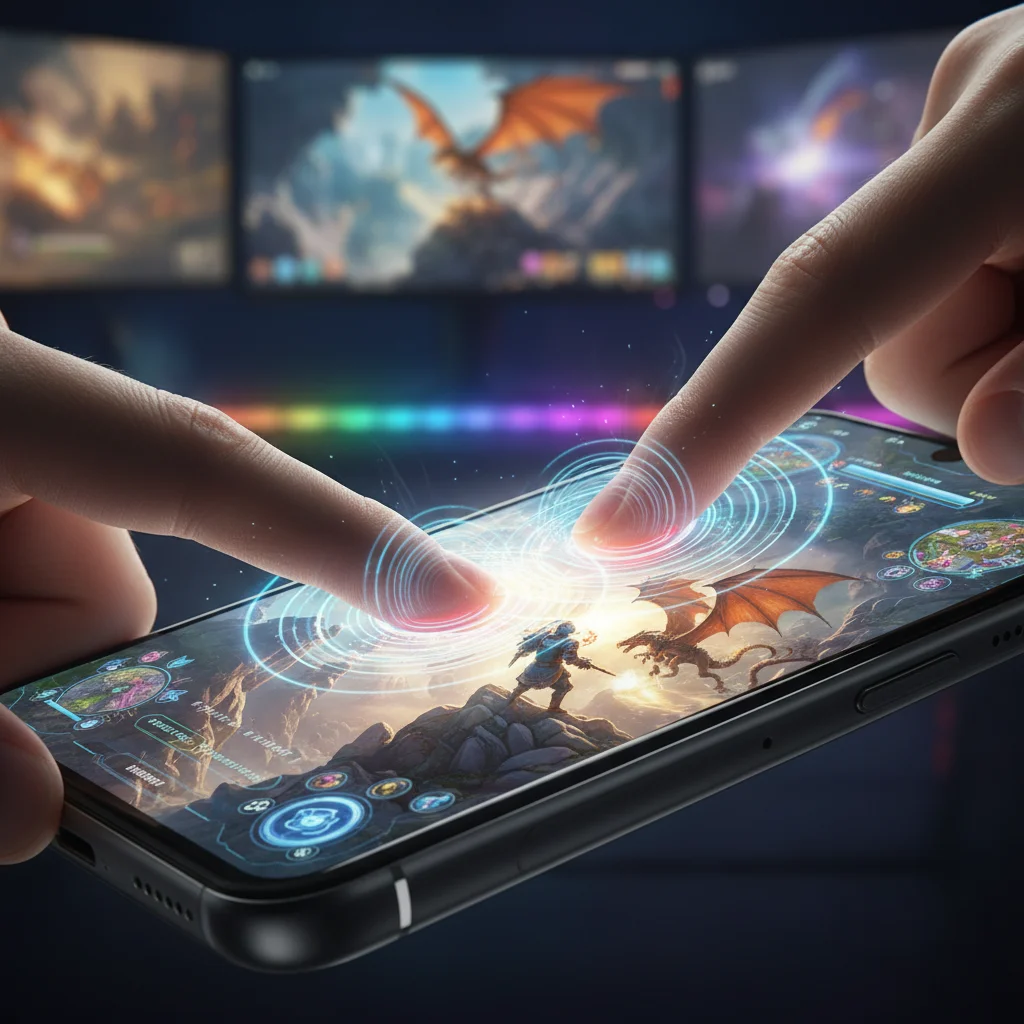
For example, in a racing game, the feel of driving over gravel might change in intensity depending on the vehicle’s speed and weight. A collision might produce different haptic sensations based on the angle of impact and the type of material hit. In a combat game, the haptic feedback for a sword clang could vary based on the force of the swing, the opponent’s armor, and even the player’s remaining health. This dynamic adjustment creates a more organic and believable tactile experience, making the game world feel truly alive and responsive.
This innovation relies heavily on sophisticated algorithms that process in-game physics, player input, and environmental data to generate appropriate haptic responses in real-time. It requires a tighter integration between the game engine and the haptic hardware, allowing for a continuous feedback loop. The result is a highly personalized and immersive experience, where the haptics are not just an addition but an integral part of the gameplay mechanics, constantly evolving with the player’s interaction.
Adaptive haptics can also extend to user interfaces, providing dynamic feedback based on the pressure applied to the screen or the speed of a swipe. A menu selection might feel different if it’s a critical choice versus a casual browse. This level of responsiveness makes interactions feel more intuitive and natural, reducing the cognitive load on the player and allowing them to focus more on the game itself. The seamless integration of adaptive mobile gaming haptics will be a hallmark of premium titles, offering an unparalleled sense of presence and control.
5. Integrating Haptics with Audio and Visuals: Multi-Sensory Symphony
While each haptic innovation is powerful on its own, their true potential is unleashed when seamlessly integrated with the game’s audio and visual elements. The future of mobile gaming haptics isn’t about isolated sensations, but about creating a cohesive multi-sensory symphony that envelops the player.
Imagine a rainstorm in a game: you see the raindrops, hear the patter, and simultaneously feel the subtle, varied vibrations of the rain hitting your device. A powerful explosion isn’t just a visual flash and a loud boom; it’s also a deep, resonant thud that reverberates through your hands. This synchronization enhances the perceived realism and impact of in-game events, making them feel more substantial and visceral.
Achieving this requires meticulous design and precise timing. Game developers will need to coordinate haptic patterns with sound effects and visual animations down to milliseconds, ensuring that all sensory inputs align perfectly. This level of synchronization amplifies the overall immersive effect, making the player feel truly present within the game world. When visual cues, audio cues, and tactile cues all work in harmony, the brain processes them as a single, unified event, leading to a much stronger and more memorable experience.
This integration also opens up possibilities for subtle cues that enhance gameplay without being overtly distracting. A haptic pulse could subtly guide a player’s attention to an off-screen threat, or a specific vibration pattern could indicate a power-up is nearby. By leveraging the interplay between different senses, developers can create richer, more informative, and ultimately more engaging mobile gaming experiences. The era of multi-sensory design, where mobile gaming haptics plays a crucial role, is rapidly approaching, promising a new era of interactive entertainment.
6. Haptic Peripherals and Accessories: Expanding the Tactile Horizon
While significant advancements are being made in on-device haptics, the US mobile gaming market by 2026 will also see a rise in haptic peripherals and accessories. These external devices can offer even greater fidelity, variety, and spatial control of tactile sensations, moving beyond the limitations of a smartphone’s internal components.
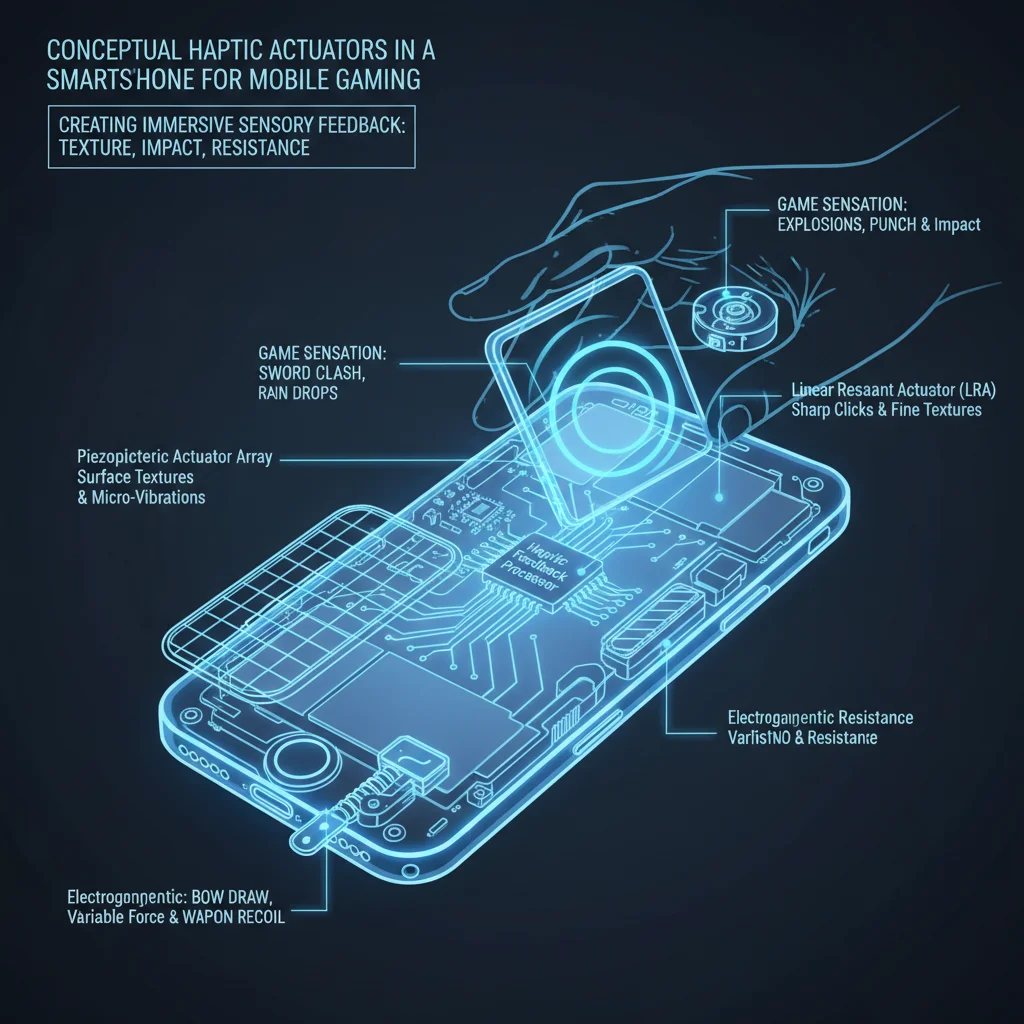
This could include specialized gaming controllers with enhanced haptic capabilities, offering more powerful actuators, finer control over vibration patterns, and even force feedback mechanisms that simulate resistance. Imagine a mobile controller that not only vibrates but also provides tension in its triggers when firing a heavy weapon or resistance in its joysticks when navigating through thick mud. These peripherals will cater to the hardcore mobile gaming audience, providing a console-like tactile experience on the go.
Beyond controllers, we might see haptic vests or wristbands that provide full-body or localized feedback, expanding the tactile experience beyond just the hands. While this might seem niche, as mobile gaming continues to grow and blur the lines with traditional console and PC gaming, such accessories could find a dedicated market. These innovations would allow for sensations like a bullet impact on a player’s chest, the rumble of an earthquake beneath their feet, or the gentle touch of a virtual character.
The integration of these peripherals will rely on robust wireless connectivity and standardized protocols, ensuring seamless communication with mobile devices. Developers will need to design games with these external haptic systems in mind, creating content that takes full advantage of their expanded capabilities. This trend signifies a broader acceptance of haptics as a core component of the gaming experience, not just an add-on. The expansion into haptic peripherals will push the boundaries of mobile gaming haptics, offering unprecedented levels of immersion and physical interaction, especially for competitive and high-fidelity titles.
The Road Ahead for Mobile Gaming Haptics
The journey of mobile gaming haptics from simple buzzes to sophisticated, multi-sensory feedback is a testament to the relentless innovation within the tech industry. By 2026, the six innovations discussed – high-definition haptics, spatially aware haptics, haptic storytelling, adaptive haptics, multi-sensory integration, and haptic peripherals – will collectively transform the mobile gaming experience in the US. These advancements are not just about making games feel ‘more real’; they are about creating deeper emotional connections, providing more intuitive feedback, and ultimately, making mobile gaming a richer, more engaging, and more memorable form of entertainment.
The implications extend beyond mere gameplay. Enhanced haptics can improve accessibility, provide new avenues for interactive storytelling, and even influence how we interact with non-gaming applications on our devices. As these technologies mature and become more widespread, they will set a new standard for user experience across the entire mobile ecosystem. Developers, hardware manufacturers, and haptic technology providers are all working in concert to bring this tactile revolution to fruition.
The future of mobile gaming is undoubtedly multi-sensory, and haptic feedback is poised to play a central role in shaping that future. Prepare to not just see and hear your games, but to truly feel them, as the boundaries between the digital and physical continue to dissolve, creating unparalleled immersive worlds right in the palm of your hand. The evolution of mobile gaming haptics promises an exciting and tangible future for gamers across the United States.