Augmented Reality on Smartphones: 2026’s Top 5 Game-Changing Applications
Augmented Reality on Smartphones: 2026’s Top 5 Game-Changing Applications
The convergence of advanced smartphone technology and sophisticated augmented reality (AR) capabilities is no longer the stuff of science fiction. We are on the cusp of a profound transformation, where our smartphones will serve as powerful portals to an enhanced reality. By 2026, augmented reality on smartphones will have moved beyond novelty apps to become an indispensable part of our daily lives, reshaping how we work, learn, shop, and interact with the world around us. This article delves into the top five game-changing smartphone AR applications that are set to define the next era of mobile technology.
The journey of augmented reality on smartphones began modestly, with simple filters and games like Pokémon GO. However, exponential advancements in mobile processors, camera technology, display resolutions, and AI algorithms have paved the way for truly immersive and practical AR experiences. As 5G networks become ubiquitous and dedicated AR hardware within smartphones becomes standard, the potential for innovative smartphone AR applications is virtually limitless. Let’s explore the groundbreaking uses that will dominate the landscape by 2026.
1. Hyper-Personalized Retail and Immersive Shopping Experiences
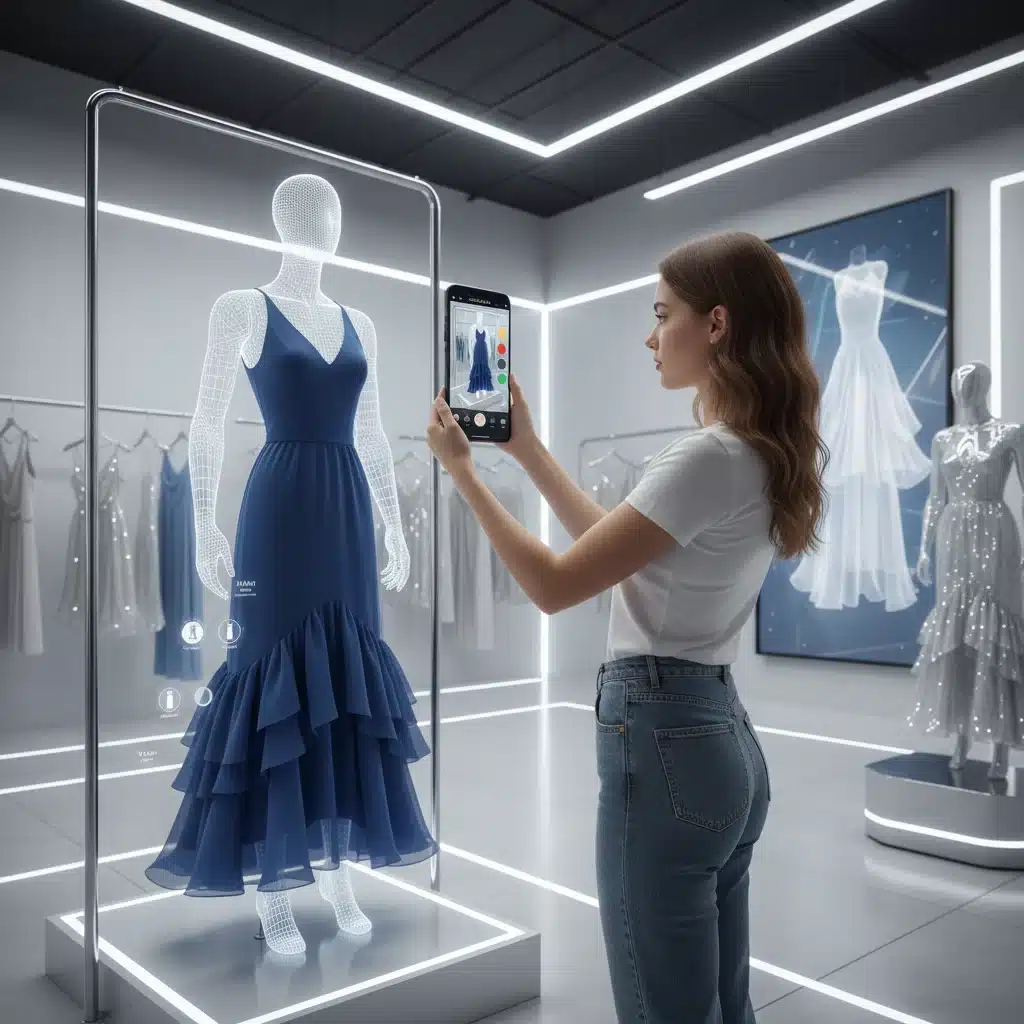
Imagine walking into a store, or even browsing from your couch, and being able to virtually ‘try on’ clothes, see how furniture would look in your living room, or even visualize makeup on your face – all through your smartphone. By 2026, augmented reality on smartphones will have revolutionized the retail sector, offering hyper-personalized and immersive shopping experiences that bridge the gap between online and physical retail.
This isn’t just about static 3D models; we’re talking about dynamic, real-time rendering that adapts to your body shape, room dimensions, and even lighting conditions. Retailers will leverage advanced computer vision and ARKit/ARCore capabilities to create highly accurate digital twins of their products. Customers will simply point their smartphone camera at themselves or their environment, and the AR application will overlay the chosen product with remarkable realism. This will drastically reduce return rates for online purchases and significantly enhance customer satisfaction.
Furthermore, in-store AR will provide shoppers with instant access to product information, customer reviews, and personalized recommendations as they browse. Imagine hovering your phone over a product and seeing its eco-friendly credentials, allergen information, or even a short video of its manufacturing process. The ability to visualize products in context, whether it’s a new pair of shoes on your feet or a new appliance in your kitchen, will transform decision-making and make shopping a far more engaging and efficient activity. The future of retail is undoubtedly augmented, driven by sophisticated smartphone AR applications.
2. Advanced On-Demand Education and Interactive Learning
The classroom of 2026 will extend far beyond four walls, thanks to the power of augmented reality on smartphones. AR is poised to democratize education, making complex concepts accessible and engaging for learners of all ages and in all locations. Forget static diagrams and dry textbooks; imagine interactive 3D models of the human anatomy, ancient ruins, or complex machinery appearing right in front of you, manipulable with a swipe of your finger.
These smartphone AR applications will allow students to virtually dissect a frog, explore the surface of Mars, or reconstruct historical events with unparalleled immersion. Teachers will be able to create dynamic lessons that bring abstract ideas to life, fostering deeper understanding and retention. For example, a chemistry student could visualize molecular structures in 3D, observing their bonds and reactions in real-time. An engineering student could overlay a digital blueprint onto a physical structure to identify components or potential issues.
Beyond formal education, AR will fuel a new era of on-demand learning and skill development. Want to learn how to fix a leaky faucet? An AR app could guide you step-by-step, overlaying instructions and visual cues directly onto the physical pipes. Learning a new language? AR could translate signs and menus in real-time, displaying the translated text directly over the foreign script. This personalized, interactive approach to learning will cater to diverse learning styles and make education a continuous, engaging process throughout life.
3. Enhanced Navigation and Smart City Interaction
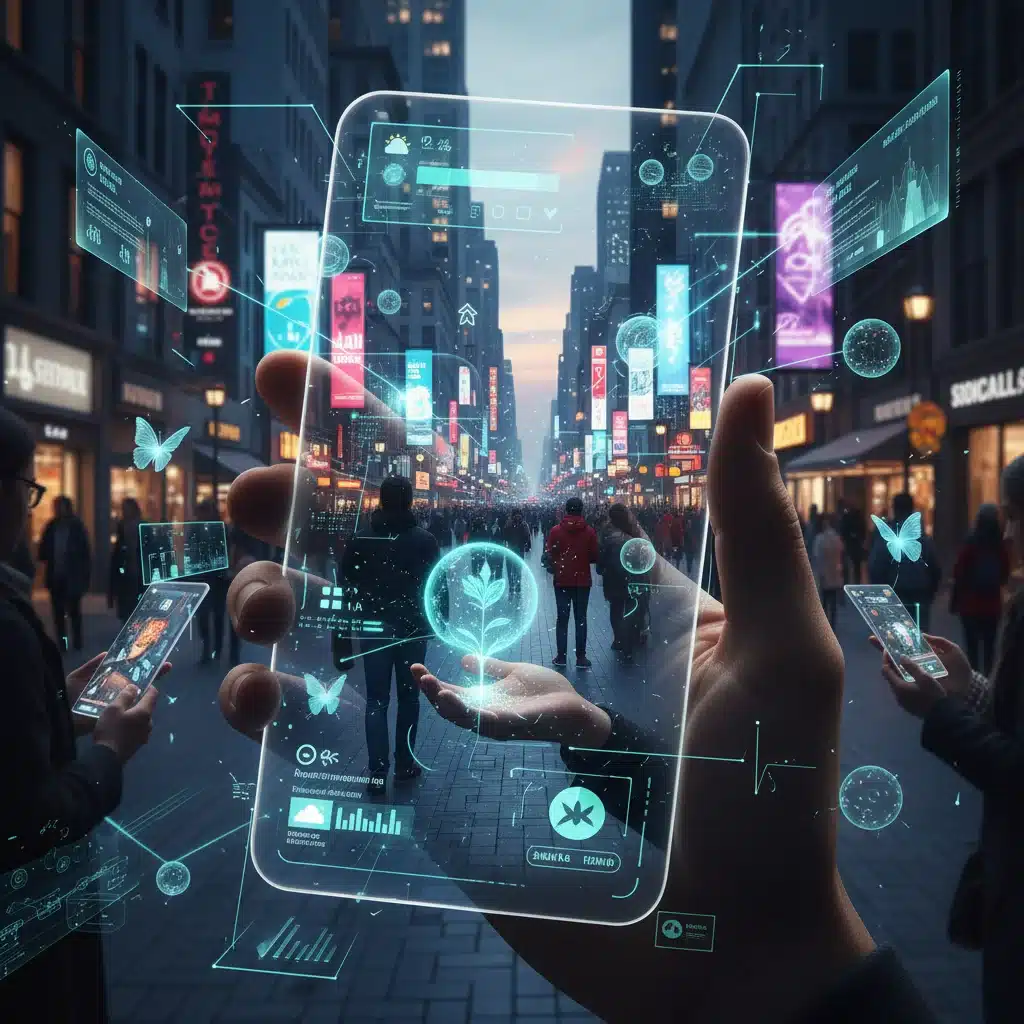
Getting around an unfamiliar city or even navigating complex indoor spaces will become effortless with advanced augmented reality on smartphones. By 2026, AR navigation will transcend simple blue dots on a map, offering intuitive, visual guidance that blends seamlessly with the real world. Imagine holding up your phone and seeing arrows overlaid on the sidewalk, pointing you to your destination, along with real-time information about points of interest, public transport schedules, and even local deals.
These smartphone AR applications will be invaluable for tourists, commuters, and even emergency services. Beyond basic navigation, AR will transform how we interact with smart city infrastructure. Imagine pointing your phone at a bus stop and seeing the arrival times of the next three buses, or at a historical landmark to instantly access its rich history and fascinating facts. Public art installations could come alive with interactive digital layers, offering a deeper engagement with urban spaces.
Indoor navigation will also see a massive leap forward. Hospitals, airports, and large shopping malls often present confusing layouts. AR apps will guide users through complex corridors and multiple floors, overlaying directions onto the live camera feed. This precision will be crucial for improving efficiency, accessibility, and overall user experience in bustling environments. The integration of 5G and precise GPS will ensure these AR overlays are accurate and responsive, making getting lost a thing of the past.

4. Transformative Industrial and Field Service Applications
While consumer applications often grab headlines, augmented reality on smartphones is set to deliver monumental value in industrial and field service sectors by 2026. Technicians will be equipped with powerful AR tools that provide real-time information, remote assistance, and interactive guides, drastically improving efficiency, reducing errors, and enhancing safety in complex operations.
Consider a field engineer tasked with repairing a complex piece of machinery. Instead of flipping through thick manuals or relying solely on memory, an AR app on their smartphone could overlay digital instructions directly onto the equipment. This could include step-by-step repair guides, highlighted components, diagnostic data, and even real-time video feeds from a remote expert who can draw annotations directly onto the technician’s view. This level of guided assistance ensures even junior technicians can perform complex tasks with confidence and accuracy.
In manufacturing, AR can be used for quality control, assembly guidance, and training. Workers can use their smartphones to verify component placement, identify defects, or learn new assembly procedures through interactive overlays. For industries like construction, AR can superimpose building plans onto real-world sites, allowing workers to visualize progress, identify potential clashes, and ensure accuracy in real-time. These smartphone AR applications will lead to significant cost savings, improved productivity, and a more skilled workforce across various industries.
5. Immersive Social Interaction and Collaborative Experiences
The way we connect and collaborate with others is also destined for an AR-driven overhaul. By 2026, augmented reality on smartphones will enable more immersive and interactive social interactions, blurring the lines between physical and digital presence. This goes far beyond video calls; imagine sharing a virtual space with friends, no matter where you are geographically, and interacting with shared digital objects.
Picture a scenario where you’re discussing interior design ideas with a friend who lives across the country. Through a shared AR experience on your smartphones, you could both view and manipulate a 3D model of a new sofa in your living room, experimenting with colors and placements as if you were physically together. Collaborative gaming will reach new heights, with virtual elements seamlessly integrated into the real world, allowing multiple players to interact with the same digital environment from different physical locations.
Even everyday social interactions will be enhanced. Attending a concert or a sporting event could involve AR overlays providing real-time statistics, player information, or interactive fan experiences visible only through your phone. AR-enhanced messaging apps could allow you to leave virtual notes or digital graffiti in specific physical locations for friends to discover later. These smartphone AR applications will create richer, more engaging social connections, extending our digital lives into the physical world in innovative ways.
The Technological Underpinnings of Future Smartphone AR
The remarkable advancements expected in augmented reality on smartphones by 2026 are not happening in a vacuum. They are built upon a foundation of rapidly evolving technologies:
- Advanced Mobile Processors: Chips like Apple’s A-series and Qualcomm’s Snapdragon lines are becoming incredibly powerful, capable of handling complex 3D rendering and real-time computer vision tasks with remarkable efficiency.
- LiDAR Scanners and Depth Sensors: Increasingly common in high-end smartphones, these sensors allow devices to accurately map physical environments, understand distances, and precisely place virtual objects, leading to more realistic and stable AR experiences.
- 5G Connectivity: The low latency and high bandwidth of 5G are crucial for cloud-rendered AR experiences, real-time multi-user interactions, and rapid downloading of complex AR assets, making smartphone AR applications more responsive and seamless.
- Improved Camera Technology: Higher resolution cameras, better low-light performance, and advanced optical image stabilization contribute to more accurate environmental tracking and higher quality AR overlays.
- AI and Machine Learning: AI algorithms are essential for tasks like object recognition, semantic understanding of environments, gesture recognition, and predictive tracking, all of which enhance the intelligence and responsiveness of AR experiences.
- Dedicated AR Software Platforms: Apple’s ARKit and Google’s ARCore continue to evolve, offering developers robust tools and frameworks to create sophisticated and stable augmented reality on smartphones.
These synergistic technologies are propelling AR from a niche technology to a mainstream utility, embedded deeply within the mobile ecosystem.
Challenges and Ethical Considerations for Smartphone AR
While the future of augmented reality on smartphones is undeniably bright, it’s important to acknowledge the challenges and ethical considerations that will need to be addressed. As AR becomes more pervasive, issues such as data privacy, digital fatigue, and the potential for misinformation become more pronounced.
Data Privacy: AR applications often require access to camera feeds, location data, and environmental scans. Ensuring this sensitive data is collected, stored, and used responsibly will be paramount. Robust regulations and transparent user controls will be necessary to build trust.
Digital Fatigue and Screen Time: While AR aims to blend digital with physical, excessive reliance on smartphone AR applications could exacerbate issues related to screen time and digital detachment from direct physical interaction. Balancing immersive experiences with healthy digital habits will be a key challenge.
Misinformation and Deepfakes: The ability to seamlessly overlay digital information onto the real world also presents opportunities for malicious actors to spread misinformation or create convincing deepfakes. Developing robust authentication and verification mechanisms will be crucial.
Accessibility and Inclusivity: Ensuring that augmented reality on smartphones is accessible to individuals with disabilities and that it doesn’t create new digital divides will be an ongoing effort. Designing for diverse user needs from the outset will be vital for widespread adoption.
Addressing these challenges proactively will be essential for AR to reach its full potential as a beneficial and transformative technology for society.
Conclusion: The Augmented Future in Your Pocket
By 2026, augmented reality on smartphones will transcend its current status as a fascinating but often experimental technology. It will be deeply integrated into the fabric of our daily lives, transforming how we perceive and interact with the world. The five applications discussed – hyper-personalized retail, advanced on-demand education, enhanced navigation, transformative industrial uses, and immersive social interactions – represent just the tip of the iceberg.
The smartphone, already a ubiquitous tool, is evolving into a powerful AR lens, offering a seamless blend of digital information and physical reality. As hardware continues to shrink, processing power grows, and AI becomes more sophisticated, the line between the real and the augmented will become increasingly blurred. The future is not just about looking at a screen; it’s about looking through it, to a world enriched and enhanced by the incredible potential of smartphone AR applications. Get ready for a truly augmented future, right in the palm of your hand.