Advanced Mobile Security: Protecting Your Device in 2026
In an increasingly interconnected world, our smartphones have become extensions of ourselves, holding a wealth of personal and professional information. From banking details and private messages to work documents and cherished memories, the data stored on our mobile devices is invaluable. As technology advances, so do the sophistication and frequency of cyber threats. This makes robust mobile security 2026 solutions not just a luxury, but an absolute necessity. The digital landscape is constantly evolving, and staying ahead of malicious actors requires a proactive and informed approach.
The year 2026 brings with it new challenges and innovative solutions in the realm of mobile security. We’re witnessing a paradigm shift from traditional antivirus software to comprehensive security suites that offer multi-layered protection. These advanced applications are designed to combat a new breed of threats, including AI-powered malware, sophisticated phishing scams, and zero-day exploits. Understanding these evolving threats and equipping your device with the right defenses is paramount to safeguarding your digital life.
This comprehensive guide will delve into the critical aspects of mobile security 2026, exploring the emerging threats, the innovative features of the latest antivirus apps, and practical strategies to enhance your device’s protection. Whether you’re a tech enthusiast or a casual smartphone user, this article will provide you with the knowledge and tools needed to navigate the digital world securely and confidently.
The Evolving Threat Landscape: What’s New in 2026?
The nature of cyber threats is dynamic, and what worked last year might not be sufficient for mobile security 2026. Cybercriminals are constantly refining their tactics, leveraging advanced technologies to bypass traditional defenses. Here’s a look at some of the key threats that define the current mobile security landscape:
AI-Powered Malware and Polymorphic Threats
One of the most significant advancements in cybercrime is the rise of AI-powered malware. These sophisticated threats can learn and adapt, making them incredibly difficult to detect and neutralize. Polymorphic malware, a subset of this category, can change its code signature with each infection, evading signature-based detection methods used by older antivirus programs. This necessitates antivirus solutions that utilize behavioral analysis and machine learning to identify suspicious activities rather than just known threat signatures.
Advanced Phishing and Social Engineering
Phishing attacks continue to be a primary vector for mobile compromise. In 2026, these attacks are more personalized and convincing, often employing deepfake technology and sophisticated social engineering tactics to trick users into divulging sensitive information or downloading malicious content. Spear phishing, targeting specific individuals, and smishing (SMS phishing) are particularly prevalent on mobile devices, where users might be less vigilant than on a desktop.
Zero-Day Exploits and Supply Chain Attacks
Zero-day exploits, vulnerabilities in software or hardware that are unknown to the vendor, pose a significant risk. Cybercriminals actively seek and exploit these flaws before patches are available. Furthermore, supply chain attacks, where attackers compromise legitimate software or hardware at the manufacturing or distribution stage, are becoming more common, potentially infecting devices before they even reach the end-user. Effective mobile security 2026 strategies must account for these advanced and often stealthy attack methods.
Ransomware’s Persistent Threat
Ransomware remains a formidable threat, with attackers encrypting mobile device data and demanding payment for its release. While often associated with desktop systems, mobile ransomware is increasingly prevalent, targeting personal photos, videos, and documents. The emotional distress and potential data loss associated with ransomware make it a high-stakes attack.
Key Features of a Superior Mobile Antivirus App in 2026
To effectively combat the evolving threats, a modern mobile antivirus app in 2026 must offer a comprehensive suite of features. Simply scanning for viruses is no longer enough. Here are the essential capabilities you should look for:
Real-time Threat Detection and Behavioral Analysis
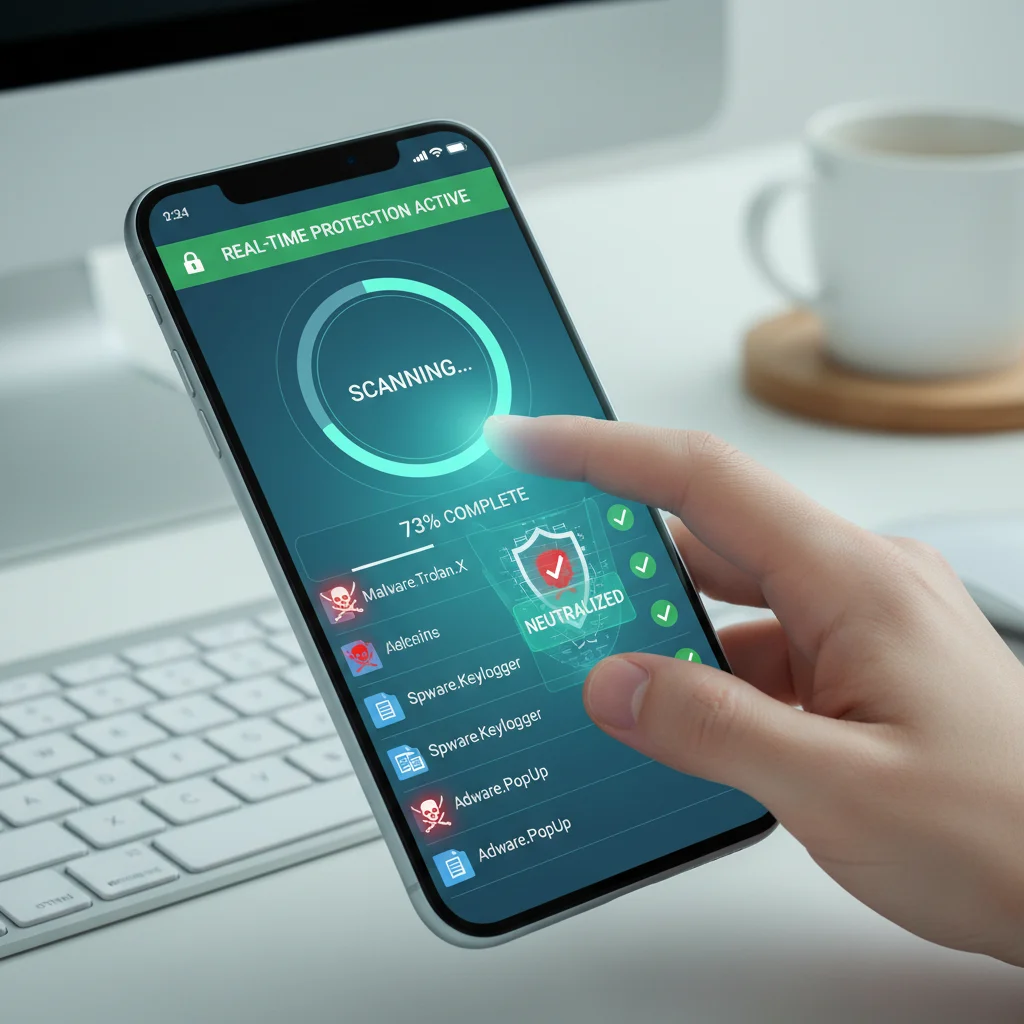
The cornerstone of effective mobile security 2026 is real-time protection. This means the app actively monitors your device for suspicious activity, downloads, and network connections. Behavioral analysis, powered by AI and machine learning, is crucial here. Instead of relying solely on known virus definitions, the app analyzes how applications and processes behave, identifying anomalies that might indicate a novel or polymorphic threat.
Advanced Anti-Phishing and Web Protection
A robust antivirus app should include advanced anti-phishing capabilities that identify and block malicious websites and links, even those disguised as legitimate ones. This web protection should work across all browsers and apps on your device, providing a crucial layer of defense against social engineering attacks. Some apps even integrate with messaging platforms to detect malicious links in SMS or instant messages.
Privacy Protection and Data Encryption
Beyond threat detection, privacy is a major concern. A top-tier mobile security solution in 2026 will offer features like app locking to secure sensitive applications, a privacy advisor that identifies apps with excessive permissions, and potentially built-in VPN services for secure browsing. Data encryption for sensitive files stored on your device adds another layer of protection against unauthorized access.
Anti-Theft and Device Locator
Losing your phone can be as devastating as a cyberattack, especially if it contains sensitive data. Comprehensive mobile security 2026 apps include robust anti-theft features. These typically allow you to remotely locate, lock, and wipe your device if it’s lost or stolen, preventing unauthorized access to your information. Some even offer camera trap features, taking a photo of anyone attempting to unlock your device.
Secure Wi-Fi Scanner and Network Protection
Public Wi-Fi networks are notorious for security vulnerabilities. A good mobile security app will include a secure Wi-Fi scanner that alerts you to unsecured networks and potential man-in-the-middle attacks. It should also offer network protection features to encrypt your data when connecting to untrusted networks, often through an integrated VPN.
App Anomaly Detection and Permission Management
Many threats originate from seemingly legitimate apps that request excessive permissions. Advanced security apps can analyze app behavior for anomalies even after installation. Furthermore, a permission manager helps you understand and control what data and functionalities each app can access, empowering you to make informed decisions about your privacy.
Choosing the Right Antivirus App for Mobile Security 2026
With numerous options available, selecting the best antivirus app for your mobile security needs in 2026 can be challenging. Here’s a guide to help you make an informed decision:
Reputation and Reviews
Start by researching reputable security vendors. Look for apps with consistently high ratings and positive reviews from independent testing labs (like AV-Test, AV-Comparatives) and users. These sources often provide unbiased insights into an app’s effectiveness and performance. A strong track record in mobile security 2026 is a key indicator of reliability.
Features and Functionality
Compare the features offered by different apps against the list of essential capabilities discussed above. Ensure the app provides real-time protection, advanced anti-phishing, privacy tools, and anti-theft functionalities. Consider your specific needs; for example, if you frequently use public Wi-Fi, a built-in VPN might be a priority.
Performance Impact
A good antivirus app should protect your device without significantly impacting its performance or battery life. Look for apps that are lightweight and optimized for mobile devices. Read reviews to see if users report any noticeable slowdowns or excessive battery drain.
User Interface and Ease of Use
The app should have an intuitive and user-friendly interface, making it easy to navigate and understand its features. Complex or confusing interfaces can deter users from utilizing the app’s full potential, thereby compromising their mobile security 2026.
Customer Support
Reliable customer support is crucial in case you encounter any issues or have questions. Check if the vendor offers multiple support channels (email, chat, phone) and if their support is responsive and helpful.
Pricing and Subscription Models
Many premium antivirus apps operate on a subscription model. Evaluate the pricing plans and ensure they align with your budget. Some apps offer free versions with limited features, which might be suitable for basic protection, but for comprehensive mobile security 2026, a paid subscription is often necessary.
Practical Solutions: Enhancing Your Mobile Security Beyond Antivirus
While an advanced antivirus app is crucial, it’s just one component of a holistic mobile security 2026 strategy. Here are additional practical steps you can take to further fortify your device:
Keep Your Software Updated
This cannot be stressed enough. Software updates often include critical security patches that address newly discovered vulnerabilities. Always install operating system updates and app updates as soon as they become available. Running outdated software is like leaving your front door unlocked.
Use Strong, Unique Passwords and Biometrics
Never reuse passwords across different accounts. Use strong, complex passwords for your device and important apps, combining letters, numbers, and symbols. Enable biometric authentication (fingerprint or facial recognition) for an added layer of security. Consider using a reputable password manager.
Enable Two-Factor Authentication (2FA)
Wherever possible, enable 2FA for your online accounts. This adds an extra layer of security, requiring a second verification method (like a code sent to your phone) in addition to your password. This significantly reduces the risk of unauthorized access, even if your password is compromised.
Be Wary of Public Wi-Fi
As mentioned, public Wi-Fi networks are often unsecured. Avoid conducting sensitive transactions (banking, online shopping) when connected to public Wi-Fi. If you must use it, employ a VPN to encrypt your traffic. Your mobile security 2026 depends on vigilant network practices.
Review App Permissions Regularly
Periodically review the permissions granted to your installed apps. If an app requests permissions that seem unrelated to its functionality (e.g., a calculator app requesting access to your camera or contacts), reconsider its necessity or find an alternative. Limit access to what is strictly necessary.
Backup Your Data
Regularly back up your smartphone data to a secure cloud service or an external drive. In the event of a device loss, damage, or ransomware attack, a recent backup ensures you can restore your essential information, minimizing disruption and data loss. This is a fundamental aspect of comprehensive mobile security 2026.
Avoid Clicking Suspicious Links or Downloading from Untrusted Sources
Exercise extreme caution when encountering suspicious links in emails, text messages, or social media. Verify the sender’s legitimacy before clicking. Similarly, only download apps from official app stores (Google Play Store, Apple App Store) to minimize the risk of installing malicious software.
Encrypt Your Device
Most modern smartphones offer device encryption. Ensure this feature is enabled. Device encryption scrambles all the data on your phone, making it unreadable to unauthorized individuals even if they gain physical access to your device. This is a critical component of mobile security 2026.
Be Mindful of Your Digital Footprint
The less personal information you share online, the less data is available for cybercriminals to exploit. Be selective about what you post on social media and what information you provide to websites and apps. A smaller digital footprint reduces your attack surface.
The Future of Mobile Security: Beyond 2026
As we look beyond 2026, the landscape of mobile security will continue to evolve at a rapid pace. Here are some trends and predictions for the future:
Integrated Hardware Security
Expect to see even deeper integration of security features directly into mobile hardware. This could involve dedicated security chips that handle encryption, biometric authentication, and threat detection at a fundamental level, making devices inherently more secure. This hardware-level approach will be vital for robust mobile security 2026 and beyond.
Quantum-Resistant Cryptography
The advent of quantum computing poses a potential threat to current encryption standards. Research and development in quantum-resistant cryptography will become paramount to ensure the long-term security of mobile communications and data. This will be a significant area of focus for future mobile security 2026 advancements.
Hyper-Personalized Security
Security solutions will become even more personalized, adapting to individual user behavior, location, and typical usage patterns. AI and machine learning will play an even larger role in creating adaptive security profiles that can detect deviations from normal behavior, flagging potential threats with greater accuracy.
Decentralized Security Models
Blockchain and decentralized technologies might offer new paradigms for mobile security, providing immutable records of device activity and enhanced data integrity. This could lead to more transparent and resilient security frameworks.
Increased Regulatory Scrutiny
As mobile devices become central to our lives, governments and regulatory bodies will likely impose stricter data privacy and security regulations, forcing manufacturers and software developers to prioritize security by design. This will undoubtedly shape the future of mobile security 2026 and beyond.

Conclusion: A Proactive Approach to Mobile Security 2026
The challenges to mobile security 2026 are significant, but so are the solutions available. By understanding the evolving threat landscape, investing in a comprehensive antivirus app with advanced features, and adopting proactive security practices, you can create a formidable defense for your smartphone and the invaluable data it holds. Remember, cybersecurity is an ongoing process, not a one-time setup. Regular updates, vigilance against phishing, and smart digital habits are your best allies in maintaining a secure mobile experience.
As technology continues its relentless march forward, so too will the ingenuity of cybercriminals. However, with the right tools and a commitment to secure practices, you can confidently navigate the digital world of 2026 and beyond, knowing your mobile device and personal information are well-protected. Make mobile security 2026 a top priority, and empower yourself with the knowledge and resources to stay safe in an increasingly connected world.