The Best Educational Apps for Kids in 2026: A Review of 6 Platforms Endorsed by US Educators
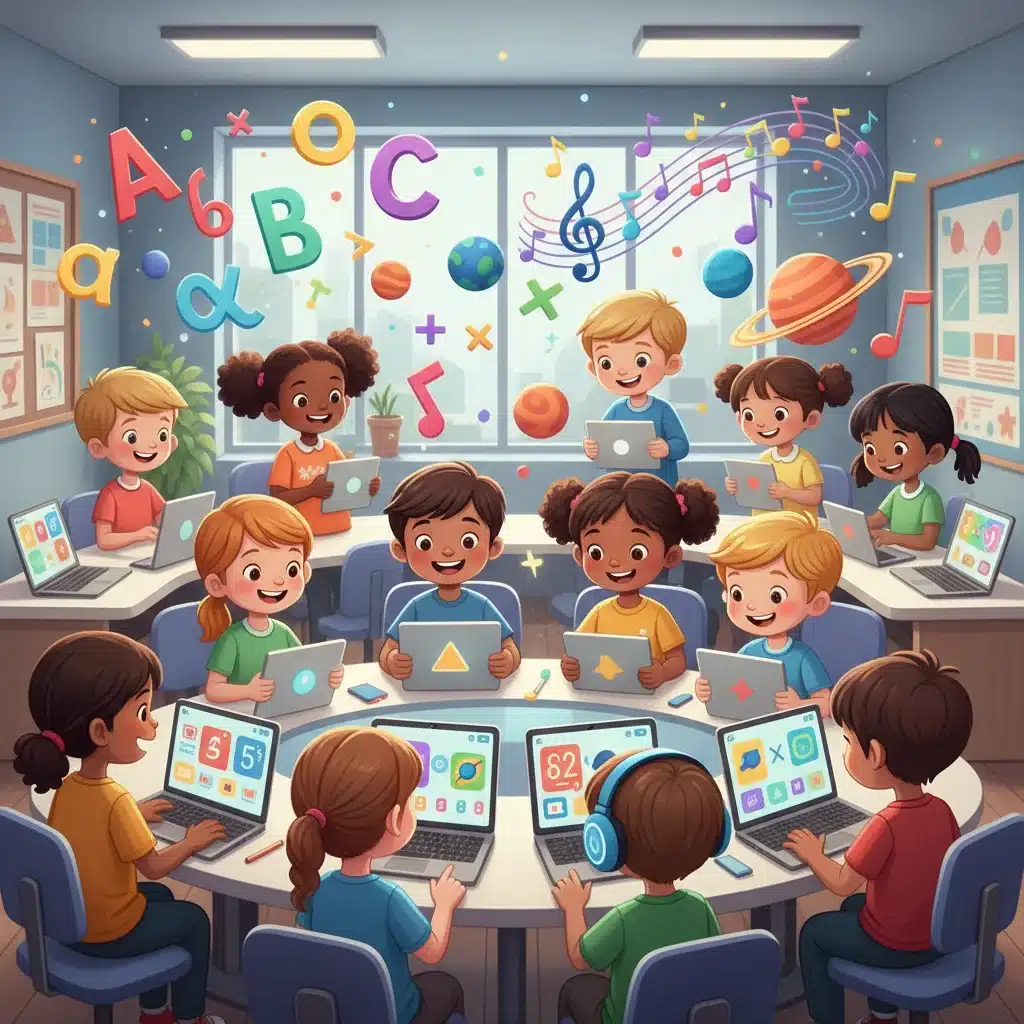
In an era where digital tools increasingly shape our daily lives, leveraging technology for learning has become not just an option, but a necessity. For parents and educators alike, identifying the best educational apps for kids is paramount to ensuring that screen time is both productive and enriching. As we step into 2026, the landscape of educational technology (edtech) continues to evolve at a rapid pace, offering innovative and engaging platforms designed to foster critical thinking, creativity, and foundational skills. This comprehensive guide delves into six standout educational apps that have garnered significant praise and endorsement from US educators, providing a detailed review to help you make informed decisions for your child’s learning journey.
The quest for the best educational apps is often challenging, given the sheer volume of options available. Many apps promise educational value, but only a select few truly deliver on that promise, backed by pedagogical research and positive user experiences. Our selection criteria for this review prioritize apps that offer a robust curriculum alignment, engaging user interfaces, adaptive learning pathways, and strong privacy policies. We’ve consulted with experienced US educators, who have firsthand knowledge of what works in both classroom and home learning environments, to bring you a curated list of platforms that genuinely make a difference.
Understanding the impact of digital learning tools on child development is crucial. The right educational app can transform abstract concepts into tangible, interactive experiences, making learning enjoyable and accessible. From early literacy to advanced STEM concepts, these platforms are designed to cater to a wide range of ages and learning styles. This article will not only introduce you to these top-tier apps but also provide insights into their unique features, benefits, and how they contribute to a holistic educational experience. Let’s explore the future of learning, powered by the best educational apps of 2026.
The Evolving Landscape of Educational Technology for Children
The journey of educational technology has been nothing short of transformative. From simple digital flashcards to sophisticated AI-driven adaptive learning systems, the evolution has been swift and profound. In 2026, the focus has shifted even further towards personalized learning experiences, leveraging data analytics to tailor content to individual student needs. This personalized approach is a cornerstone of what makes the best educational apps truly effective. Educators are increasingly relying on these tools to supplement traditional teaching methods, offering supplementary practice, enrichment opportunities, and alternative explanations that resonate with diverse learners.
One significant trend observed is the integration of gamification elements, making learning feel less like a chore and more like an adventure. Points, badges, leaderboards, and interactive challenges motivate children to continue engaging with the material, fostering a positive attitude towards learning. Moreover, the emphasis on developing 21st-century skills – critical thinking, problem-solving, creativity, and collaboration – is evident in the design of leading educational platforms. These apps are not just about memorization; they’re about empowering children to think independently and apply their knowledge in practical scenarios.
Another crucial aspect gaining prominence is accessibility and inclusivity. The best educational apps are designed to be accessible to children with varying abilities, incorporating features like text-to-speech, customizable display options, and intuitive navigation. This ensures that every child has the opportunity to benefit from digital learning, bridging gaps and promoting equitable access to quality education. The role of parents in this ecosystem has also expanded, with many apps offering dashboards and progress reports that allow guardians to monitor their child’s learning journey and provide targeted support.
Criteria for Identifying the Best Educational Apps
Before diving into the specifics of each app, it’s essential to understand the rigorous criteria we employed to select the best educational apps for this review. Our methodology was developed in collaboration with US educators, ensuring that the chosen platforms meet high standards of pedagogical soundness and practical utility.
- Curriculum Alignment: The apps must align with established educational standards, such as Common Core State Standards (CCSS) or Next Generation Science Standards (NGSS), ensuring the content is relevant and supports academic goals.
- Engagement and Interactivity: High-quality apps captivate children’s attention through interactive elements, engaging narratives, and intuitive gameplay, making learning enjoyable and sustainable.
- Adaptive Learning: The ability of an app to adjust its difficulty and content based on a child’s performance is crucial for personalized learning, ensuring they are always challenged but not overwhelmed.
- Educational Efficacy: There should be clear evidence or strong anecdotal support from educators and parents that the app genuinely improves learning outcomes and skill development.
- User Experience (UX): A well-designed interface, ease of navigation, and minimal distractions contribute to a positive user experience for both children and parents.
- Safety and Privacy: Robust privacy policies, COPPA compliance, and a commitment to protecting children’s data are non-negotiable. The app environment should be free from inappropriate content and excessive advertising.
- Parent/Educator Controls and Reporting: Features that allow parents and teachers to monitor progress, customize learning paths, and receive insights into a child’s performance are highly valued.
- Accessibility: Consideration for children with special needs, including features like text-to-speech, adjustable font sizes, and alternative input methods.
- Cost-Effectiveness: While some of the best educational apps may come with a subscription fee, their value should justify the cost, offering a wealth of content and features.
By adhering to these stringent criteria, we aim to provide a reliable and trustworthy guide to the best educational apps available for kids in 2026, empowering parents and educators to make choices that truly benefit young learners.
Top 6 Educational Apps for Kids in 2026: Endorsed by US Educators
1. ABCmouse.com Early Learning Academy
Overview: ABCmouse.com has long been a frontrunner in early childhood education, and it continues to be one of the best educational apps for young learners in 2026. Designed for children ages 2-8, it offers a comprehensive curriculum covering reading, math, art, music, and science. The platform boasts over 10,000 learning activities and 850 lessons across 10 levels. Its sequential learning path ensures that children build skills incrementally, moving from foundational concepts to more advanced topics.
Key Features:
- Comprehensive Curriculum: Covers all major academic subjects for preschool through second grade.
- Step-by-Step Learning Path: Guides children through a structured curriculum with clear learning objectives.
- Engaging Activities: Includes animated lessons, games, puzzles, songs, art activities, and printable worksheets.
- Progress Tracking: Parents can monitor their child’s progress and identify areas for improvement.
- Award System: Tickets and virtual rewards motivate children to continue learning.
Educator Endorsement: US educators praise ABCmouse for its thorough curriculum alignment and its ability to engage young children effectively. “It’s a fantastic resource for reinforcing classroom learning at home, especially for developing early literacy and numeracy skills,” says Sarah Chen, a kindergarten teacher from California. The platform’s structured approach ensures that children are building a strong foundation, making it one of the best educational apps for early learners.
Benefits: Provides a safe, ad-free environment. Develops foundational skills across multiple subjects. Highly engaging for young children. Offers a clear learning progression.
Considerations: Primarily subscription-based. Best suited for younger children, ages 2-8.
2. Khan Academy Kids
Overview: Khan Academy Kids stands out as one of the best educational apps for children aged 2-8, primarily because it’s completely free and ad-free. Developed by experts in early education, it offers thousands of educational activities, books, songs, and videos. The app’s adaptive learning system creates a personalized learning path for each child, adjusting to their pace and skill level across subjects like reading, writing, math, social-emotional learning, and creative expression.
Key Features:
- Free and Ad-Free: High-quality education without financial barriers or distractions.
- Adaptive Learning: Personalizes the curriculum to meet each child’s individual needs.
- Extensive Content Library: Features characters from beloved children’s media, including Super Simple Songs, PBS Kids, and National Geographic Young Explorer.
- Social-Emotional Learning: Integrates activities that foster empathy, problem-solving, and resilience.
- Parent Tools: Allows parents to track progress and assign specific activities.
Educator Endorsement: “Khan Academy Kids is a game-changer for equitable access to education. Its comprehensive curriculum and adaptive nature make it an invaluable tool for both classroom and home use,” comments David Lee, a first-grade teacher in New York. Its commitment to free, high-quality content firmly places it among the best educational apps available today.
Benefits: Completely free. Highly adaptive and personalized. Covers a broad range of subjects, including social-emotional learning. Strong focus on foundational skills.
Considerations: Requires an internet connection for full functionality. Content is primarily for early learners.
3. Osmo
Overview: Osmo offers a unique blend of physical and digital play, making it one of the most innovative and best educational apps for fostering creativity and critical thinking. It utilizes a reflective AI lens that attaches to an iPad or Fire tablet, allowing children to interact with on-screen games using physical game pieces, drawings, and even their hands. This innovative approach transforms the tablet into an interactive learning environment, bridging the gap between tangible and digital experiences. Osmo caters to children aged 3-12 with various kits focusing on subjects like coding, math, drawing, and language arts.
Key Features:
- Blended Learning: Combines hands-on play with digital interaction.
- Wide Range of Kits: Offers specific kits for different subjects, such as Coding Awbie, Tangram, Words, and Numbers.
- Encourages Creativity: Games like Masterpiece and Monster allow children to draw and animate their creations.
- Develops STEM Skills: Coding and math kits provide foundational knowledge in these critical areas.
- Multi-Age Appeal: Different kits cater to various age groups and skill levels.
Educator Endorsement: Dr. Emily Carter, an educational technology specialist, states, “Osmo is exceptional in its ability to make abstract concepts concrete. The physical manipulation of objects alongside digital feedback significantly enhances learning and engagement, making it one of the best educational apps for kinesthetic learners.” Its unique approach to learning is highly valued by educators.
Benefits: Promotes hands-on learning. Develops problem-solving and creative skills. Wide variety of games and subjects. Excellent for tactile learners.
Considerations: Requires a physical Osmo base and game pieces, which are an additional cost. Specific kits may be needed for different learning objectives.

4. Prodigy Math Game
Overview: Prodigy Math Game has established itself as one of the best educational apps for making math practice fun and engaging for elementary and middle school students (grades 1-8). It’s a free, fantasy-themed role-playing game where children solve math problems to cast spells and battle monsters. The game’s adaptive algorithm ensures that players are always challenged at their appropriate skill level, covering thousands of curriculum-aligned math skills.
Key Features:
- Gamified Learning: Transforms math practice into an epic adventure.
- Curriculum Aligned: Covers over 1,500 math skills from grades 1-8, aligned with US curricula.
- Adaptive Difficulty: Adjusts questions based on the child’s performance.
- Teacher/Parent Dashboards: Provides detailed reports on progress and areas for improvement.
- Safe Multiplayer Environment: Children can play with friends in a moderated, safe setting.
Educator Endorsement: Mark Johnson, a fifth-grade math teacher, raves, “Prodigy has revolutionized how my students approach math. They’re so motivated to play that they don’t even realize they’re doing math. It’s truly one of the best educational apps for building math fluency and confidence.” Its ability to turn a often-dreaded subject into an enjoyable experience is a key factor in its success.
Benefits: Highly engaging and motivating for math practice. Adaptive learning ensures appropriate challenge. Free core game with optional paid memberships for extras. Comprehensive curriculum coverage.
Considerations: The free version has some limitations; a premium membership unlocks more features. Can be highly addictive, requiring parental guidance on screen time.
5. Epic! – Kids’ Books and Reading
Overview: For fostering a love of reading, Epic! is undeniably one of the best educational apps available. It offers an unlimited library of over 40,000 high-quality children’s books, including picture books, chapter books, audiobooks, and educational videos, for kids aged 12 and under. The platform provides personalized recommendations, reading quizzes, and progress tracking, making it an invaluable resource for developing literacy skills.
Key Features:
- Vast Digital Library: Access to thousands of books, audiobooks, and learning videos.
- Personalized Recommendations: Suggests books based on a child’s interests and reading level.
- Read-to-Me Function: Many books offer audio narration, perfect for emerging readers.
- Reading Quizzes: Helps assess comprehension and track progress.
- Educator Access: Free for educators, allowing them to assign books and track student reading.
Educator Endorsement: “Epic! has transformed reading time in my classroom and at home. The sheer volume of diverse books and the personalized recommendations keep my students excited about reading. It’s truly one of the best educational apps for cultivating lifelong readers,” shares Jessica Adams, a second-grade teacher. Its extensive library and engaging features make it a cornerstone for literacy development.
Benefits: Huge selection of books. Encourages independent reading. Supports various reading levels and interests. Free for educators.
Considerations: Primarily subscription-based for home use. Requires internet access to download or stream books.
6. Tynker: Coding for Kids
Overview: In a world increasingly driven by technology, teaching children to code is more important than ever. Tynker positions itself as one of the best educational apps for introducing kids to programming concepts in a fun and accessible way. Catering to ages 4-18, Tynker uses visual block coding (similar to Scratch) to help younger children grasp coding fundamentals, gradually transitioning to real-world languages like Python and JavaScript for older students. It offers hundreds of coding puzzles, courses, and projects, allowing children to create games, apps, and even control robots.
Key Features:
- Age-Appropriate Learning Paths: From visual block coding for beginners to text-based coding for advanced learners.
- Extensive Curriculum: Covers coding fundamentals, game design, app development, robotics, and more.
- Interactive Puzzles and Projects: Keeps learning engaging and practical.
- Integration with Popular Platforms: Connects with Minecraft, LEGO, and drones, enhancing real-world application.
- Teacher Resources: Offers lesson plans and tools for educators.
Educator Endorsement: Dr. Robert Kim, a middle school computer science teacher, notes, “Tynker demystifies coding and makes it incredibly fun. My students, even those with no prior experience, quickly grasp complex concepts and are empowered to create their own digital projects. It’s one of the best educational apps for fostering computational thinking and preparing students for future careers.”
Benefits: Makes coding accessible and fun for all ages. Comprehensive curriculum from beginner to advanced. Fosters problem-solving and logical thinking. Integrates with popular platforms.
Considerations: While there’s a free starter version, full access to all courses and features requires a subscription. Can be overwhelming initially due to the breadth of content.

Maximizing the Benefits of Educational Apps
Simply downloading the best educational apps isn’t enough; maximizing their potential requires a thoughtful approach from both parents and educators. Here are some strategies to ensure that these digital tools truly enhance a child’s learning experience:
1. Active Parental/Educator Involvement: Engage with your child while they use the apps. Ask questions about what they’re learning, participate in activities, and discuss the concepts. This shared experience can significantly amplify the educational impact and strengthen the parent-child bond.
2. Set Clear Goals and Expectations: Before your child starts using an app, discuss what they hope to learn or achieve. Celebrate small victories and encourage perseverance through challenges. This helps to frame app usage as a learning activity rather than just entertainment.
3. Integrate with Offline Learning: The best educational apps should complement, not replace, traditional learning methods. Connect app-based lessons to real-world experiences. For example, if an app teaches about plants, go outside and identify different types of trees and flowers.
4. Monitor Progress and Adjust: Utilize the parent/educator dashboards and reporting features that many of these apps offer. Track your child’s progress, identify areas where they might be struggling, and adjust the learning path or provide additional support as needed. This adaptive approach ensures the app remains challenging yet achievable.
5. Establish Healthy Screen Time Habits: Even with the best educational apps, moderation is key. Set clear boundaries for screen time, ensuring a balance with physical activity, creative play, and social interaction. Consider using timers or parental control features to manage usage effectively.
6. Encourage Exploration and Self-Directed Learning: While structured learning paths are beneficial, also allow your child time to explore the apps independently. This fosters curiosity and allows them to discover new interests and learning opportunities at their own pace.
7. Provide a Conducive Learning Environment: Ensure your child uses the apps in a comfortable, well-lit, and distraction-free environment. Minimize background noise and other potential interruptions to help them focus on the learning task at hand.
By implementing these strategies, parents and educators can transform screen time into a powerful educational asset, ensuring that children not only learn but also develop a lifelong love for learning through the aid of the best educational apps.
The Future of Educational Apps and Their Impact
Looking ahead, the future of educational apps is poised for even greater innovation. We anticipate further integration of artificial intelligence (AI) and machine learning (ML) to provide even more sophisticated adaptive learning experiences, predictive analytics for identifying learning gaps, and personalized feedback systems. Virtual Reality (VR) and Augmented Reality (AR) are also expected to play a more significant role, offering immersive learning environments that can transport children to historical events, explore the human body in 3D, or conduct virtual science experiments, making them some of the most exciting prospects among the best educational apps of tomorrow.
The emphasis will continue to be on developing a holistic learner, not just focusing on academic skills but also on critical social-emotional competencies. Apps will increasingly incorporate elements that teach empathy, resilience, collaboration, and creative problem-solving, preparing children for a complex and ever-changing world. Furthermore, the collaboration between app developers, educators, and researchers will strengthen, leading to more evidence-based and pedagogically sound educational tools.
The impact of these advancements extends beyond individual student achievement. The widespread adoption of high-quality educational apps has the potential to democratize education, providing access to world-class learning resources regardless of geographical location or socioeconomic status. They can serve as powerful tools for differentiated instruction, allowing teachers to meet the diverse needs of their students more effectively. As technology continues to evolve, so too will the definition of the best educational apps, constantly pushing the boundaries of what’s possible in learning.
Conclusion: Empowering Young Minds with the Best Educational Apps
The journey through the world of educational technology reveals a vibrant and dynamic landscape, brimming with potential to transform how children learn. The six platforms reviewed – ABCmouse.com, Khan Academy Kids, Osmo, Prodigy Math Game, Epic!, and Tynker – represent the pinnacle of what the best educational apps have to offer in 2026. Each app brings a unique strength to the table, from comprehensive early learning curricula to innovative blended play, engaging math adventures, expansive digital libraries, and accessible coding instruction.
Endorsed by US educators, these apps are not merely digital distractions; they are carefully designed tools that align with educational standards, foster critical skills, and inspire a genuine love for learning. By choosing these platforms, parents and educators are investing in high-quality, effective resources that can significantly contribute to a child’s academic success and personal development.
As we navigate the complexities of the digital age, it’s reassuring to know that there are such powerful and positive educational tools available. By thoughtfully integrating the best educational apps into a balanced learning routine, we can empower the next generation with the knowledge, skills, and curiosity they need to thrive in an increasingly connected world. The future of education is bright, and these apps are leading the way.