Battery Life Breakthroughs: New Technologies Extending Mobile Usage by 30% in 2026
In our hyper-connected world, the smartphone has become an indispensable extension of ourselves. From managing work and communicating with loved ones to navigating our surroundings and capturing life’s moments, our mobile devices are constantly in use. Yet, despite monumental advancements in processing power, camera capabilities, and display technologies, one persistent frustration continues to plague users worldwide: battery life. The perennial quest for longer uptime has driven intense research and development, and the good news is that we are on the cusp of significant breakthroughs. Industry experts predict that by 2026, new mobile battery innovations will extend typical smartphone usage by a remarkable 30%. This isn’t just about incremental improvements; it’s about fundamental shifts in how batteries are designed, manufactured, and integrated into our devices. Let’s delve into the exciting world of next-generation mobile battery innovations that promise to liberate us from constant charging anxiety.
The Current State of Mobile Batteries: Lithium-Ion’s Limitations
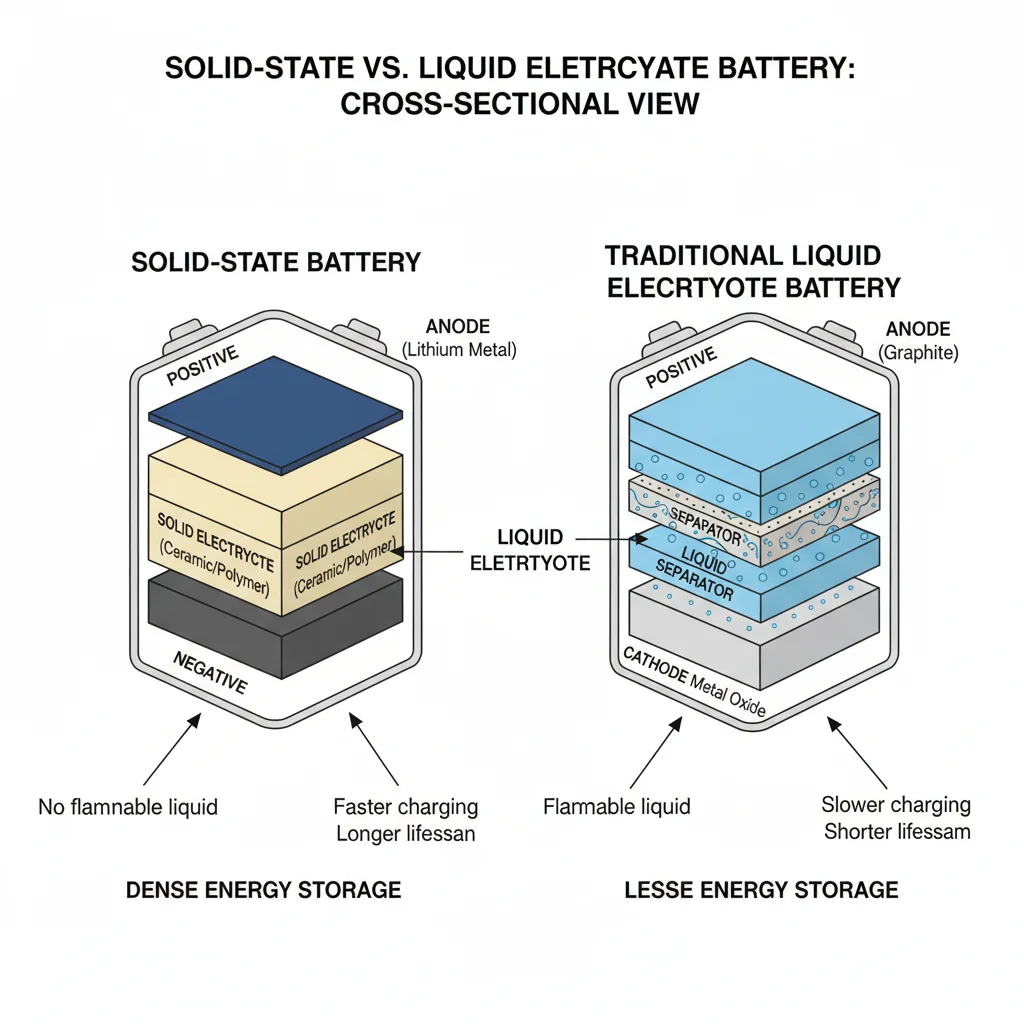
For decades, lithium-ion (Li-ion) batteries have been the workhorse of portable electronics, including smartphones. Their relatively high energy density and rechargeability made them the ideal choice. However, Li-ion technology, while refined, is approaching its theoretical limits. Traditional Li-ion batteries rely on a liquid electrolyte, which can be prone to safety issues (overheating, swelling) and limits the achievable energy density. The graphite anode, another core component, also has a finite capacity for lithium storage. As smartphone features become more power-hungry – 5G connectivity, larger and brighter displays, advanced AI processors, and sophisticated camera arrays – the demands placed on the battery continue to escalate. This has led to a plateau in significant battery life improvements, forcing manufacturers to focus on software optimizations and faster charging speeds rather than raw capacity gains. The market is hungry for true mobile battery innovations that can break these barriers.
The limitations of current Li-ion batteries are multi-faceted. Firstly, the energy density – the amount of energy stored per unit volume or weight – is reaching its peak. To significantly increase battery life, manufacturers would need to make batteries physically larger, which is contrary to the trend of thinner, lighter smartphones. Secondly, the cycle life, or the number of charge-discharge cycles a battery can endure before its capacity degrades significantly, is a concern. After a couple of years, many users notice a marked decrease in their phone’s ability to hold a charge, leading to a poorer user experience and often prompting device upgrades. Thirdly, charging times, while improved, still present a bottleneck. While ‘fast charging’ technologies can replenish a significant portion of a battery’s capacity in a short time, they often come with trade-offs in terms of heat generation and long-term battery health. Addressing these challenges requires a paradigm shift, and that’s precisely what the upcoming mobile battery innovations aim to deliver.
Solid-State Batteries: The Holy Grail of Mobile Power
Perhaps the most anticipated of all mobile battery innovations is the solid-state battery. Unlike conventional Li-ion batteries that use a liquid or gel electrolyte, solid-state batteries employ a solid electrolyte. This fundamental change offers a plethora of advantages. Firstly, safety is dramatically enhanced. The absence of a flammable liquid electrolyte virtually eliminates the risk of thermal runaway, making these batteries far safer. This also allows for more compact packaging, as protective layers can be reduced.
Secondly, solid-state batteries promise significantly higher energy density. This is because they can use lithium metal anodes, which have a much higher theoretical capacity than the graphite anodes in current Li-ion batteries. A lithium metal anode, combined with a solid electrolyte, could theoretically double or even triple the energy density of current batteries. This means a smartphone could either have a much smaller battery with the same life, or a similarly sized battery with vastly extended usage – potentially well beyond the predicted 30% increase. The potential for these mobile battery innovations is truly transformative.
While the benefits are clear, solid-state battery development faces significant hurdles. Manufacturing at scale is complex, and achieving good ionic conductivity (the ability of ions to move through the electrolyte) at room temperature remains a challenge. Companies like Samsung, Toyota, and various startups are pouring billions into R&D, with prototypes demonstrating promising results. We can expect to see solid-state components, if not full solid-state batteries, making their way into consumer electronics by 2026, starting with smaller applications before scaling to smartphones. The initial applications might be in niche areas, but the eventual goal is widespread adoption across the mobile ecosystem, marking a true revolution in mobile battery innovations.
Silicon Anode Technology: Boosting Capacity Now
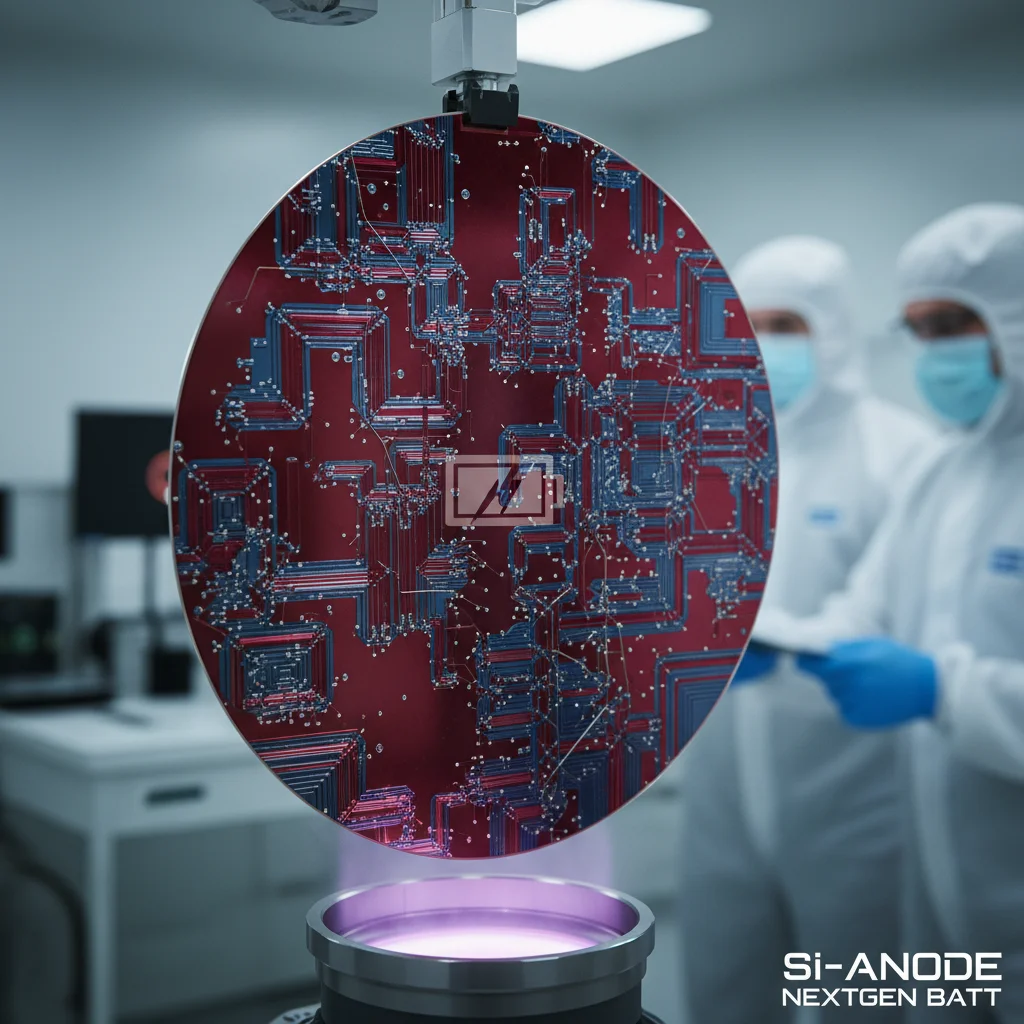
While solid-state batteries are a long-term goal, silicon anode technology represents a more immediate and tangible mobile battery innovation that is already beginning to appear in some devices. Silicon has a much higher theoretical capacity for storing lithium ions than graphite – up to ten times more. By replacing or augmenting the graphite in the anode with silicon, manufacturers can significantly increase the energy density of Li-ion batteries without a complete overhaul of the battery architecture.
The main challenge with silicon anodes has been their tendency to expand and contract significantly during charge and discharge cycles, leading to mechanical stress, cracking, and rapid degradation of battery capacity. Researchers are overcoming this by engineering silicon at the nanoscale (e.g., silicon nanowires, nanoparticles, or porous silicon structures) or by incorporating silicon oxides. These approaches allow the silicon to accommodate the volume changes more effectively, maintaining structural integrity and improving cycle life. Companies like Amprius and Sila Nanotechnologies are at the forefront of this development, with some consumer devices already featuring batteries with a percentage of silicon in their anodes. This incremental but impactful mobile battery innovation is critical for bridging the gap until more radical technologies mature.
The integration of silicon anode technology is not just about raw capacity; it also contributes to faster charging capabilities. The unique properties of nanostructured silicon can allow for quicker intercalation of lithium ions, leading to reduced charging times without compromising battery health as much as traditional fast-charging methods. As the percentage of silicon in anodes increases, we can expect to see noticeable improvements in both battery longevity and charging speed, directly contributing to the predicted 30% increase in mobile usage. This represents one of the most practical and near-term mobile battery innovations set to impact the market.
Beyond Lithium: Alternative Battery Chemistries
While Li-ion and its derivatives dominate, research into entirely new battery chemistries continues, driven by the desire for greater sustainability, lower cost, and even higher performance. These alternative mobile battery innovations could eventually offer solutions beyond what lithium-based technologies can provide.
- Lithium-Sulfur (Li-S) Batteries: These batteries have a theoretical energy density up to five times that of Li-ion. Sulfur is abundant and inexpensive. However, challenges include poor cycle life due to polysulfide shuttle effects and volume expansion of the sulfur cathode. Significant progress is being made in developing stable electrolytes and protective interlayers to mitigate these issues.
- Lithium-Air (Li-Air) Batteries: Often called ‘breathing batteries,’ these use oxygen from the air as a reactant, making them incredibly lightweight and offering extremely high theoretical energy densities – potentially 10 times that of Li-ion. They are still in very early stages of research, facing challenges with efficiency, cycle life, and preventing electrolyte degradation from atmospheric contaminants.
- Sodium-Ion (Na-ion) Batteries: Sodium is far more abundant and cheaper than lithium. While Na-ion batteries typically have lower energy density than Li-ion, they can offer excellent performance at low temperatures and are safer. They are being considered for applications where cost and safety are paramount, and energy density is less critical, but advancements could make them viable for some mobile applications in the future.
- Graphene Batteries: Graphene, a single layer of carbon atoms arranged in a hexagonal lattice, boasts incredible conductivity and strength. While ‘graphene batteries’ are often misunderstood (graphene is typically used as an additive to improve existing chemistries rather than a standalone battery material), its inclusion in anodes and cathodes can enhance charge and discharge rates, improve cycle life, and even slightly boost energy density. This mobile battery innovation acts as an enhancer for current technologies.
These alternative chemistries represent the cutting edge of mobile battery innovations, with many still years away from commercial viability in smartphones. However, continued investment in these areas is crucial for long-term sustainable power solutions.
Advanced Power Management and Software Optimizations
It’s not just about the battery hardware; intelligent software and advanced power management integrated into the smartphone’s operating system and chipsets play a crucial role in maximizing battery life. These mobile battery innovations, though not physical battery components, are equally vital.
- Adaptive Refresh Rates: Modern displays can dynamically switch refresh rates (e.g., from 120Hz down to 10Hz or even 1Hz) based on the content being displayed, significantly reducing power consumption when static images are on screen.
- AI-Powered Resource Management: Smartphone chipsets are increasingly using AI to predict user behavior and intelligently allocate resources. This means suspending background apps, optimizing CPU/GPU usage, and managing network connectivity more efficiently, all contributing to extended battery life.
- Improved Standby Efficiency: Even when not actively in use, smartphones consume power. Enhancements in modem efficiency, background process management, and deep sleep modes ensure minimal power drain during standby.
- Optimized Charging Algorithms: Smart charging systems learn user habits to slow down charging when the phone is left overnight at 80% to reduce battery degradation, only topping it up to 100% just before the user typically wakes up.
These software-driven mobile battery innovations work in tandem with hardware advancements to deliver a holistic improvement in overall power efficiency and user experience. They ensure that every milliwatt-hour of energy is utilized as effectively as possible, directly contributing to the projected 30% increase in mobile usage by 2026.
Faster Charging Technologies: Beyond Watts
While directly extending battery life, faster charging is a complementary mobile battery innovation that significantly improves the user experience. The race for higher wattage chargers continues, but the focus is also shifting to smarter and safer charging protocols. Current fast-charging solutions can provide a full charge in under an hour for many devices, and future iterations will likely push this even further.
- Gallium Nitride (GaN) Chargers: GaN technology allows for smaller, more efficient, and cooler-running chargers, making high-wattage charging more practical for consumers.
- Standardized Fast Charging: Efforts like USB Power Delivery (USB-PD) are standardizing fast-charging protocols, allowing a single charger to quickly power multiple devices, reducing e-waste and improving convenience.
- Wireless Charging Advancements: While typically slower than wired charging, wireless charging is becoming more efficient and faster. Innovations in magnetic resonance charging could allow for charging over greater distances, potentially making ‘topping up’ throughout the day more seamless and less dependent on physical contact.
- Bidirectional Charging: Some devices already allow for reverse wireless charging, enabling a smartphone to charge other smaller devices like earbuds. This functionality is expected to expand, turning smartphones into portable power banks for other gadgets, adding another layer of utility.
These charging mobile battery innovations, while not directly increasing the battery’s capacity, significantly reduce the impact of battery drain on daily life, making the 30% usage extension feel even more impactful. The convenience of rapid replenishment means users spend less time tethered to an outlet and more time enjoying their devices.
The Economic and Environmental Impact of Enhanced Battery Life
The projected 30% increase in mobile usage by 2026, driven by these mobile battery innovations, will have far-reaching economic and environmental implications. Economically, longer-lasting batteries could influence upgrade cycles. If users are satisfied with their battery performance for longer, they might delay purchasing a new device, impacting manufacturer sales models. However, it could also foster greater brand loyalty and allow companies to innovate in other areas, knowing that the core power issue is being addressed. The demand for advanced battery materials will also spur growth in mining and material science sectors, creating new jobs and investment opportunities.
Environmentally, the benefits are substantial. Longer battery life and improved cycle longevity mean devices can be used effectively for more years, reducing the frequency of phone replacements. This directly translates to less electronic waste (e-waste), a growing global concern. Furthermore, the development of more sustainable and abundant materials for alternative battery chemistries (like sodium-ion) could lessen reliance on critical and often controversially sourced materials like cobalt. The entire lifecycle of batteries, from extraction to recycling, stands to become more sustainable through these mobile battery innovations.
Moreover, enhanced battery performance supports the broader sustainability agenda by enabling more efficient energy consumption in personal devices. As devices become more powerful and capable, ensuring they remain energy-efficient is paramount. These battery improvements contribute to a smaller carbon footprint per device over its lifetime, aligning with global efforts to combat climate change. The cumulative effect of billions of smartphones having extended life and more sustainable power sources cannot be overstated, making mobile battery innovations a key pillar in future environmental stewardship.
Looking Ahead: What 2026 and Beyond Holds
The path to a 30% increase in mobile usage by 2026 is paved with a combination of incremental and revolutionary mobile battery innovations. Solid-state batteries, while still facing manufacturing challenges, are the ultimate goal, promising significant leaps in energy density and safety. Silicon anode technology offers a more immediate solution, already making its way into current devices and providing substantial gains. Alongside these hardware advancements, sophisticated software optimizations and faster, smarter charging solutions are ensuring that every aspect of power management is refined.
Beyond 2026, the landscape of mobile power will continue to evolve. We can anticipate even greater integration of AI in power management, potentially leading to predictive charging and dynamic power allocation that is invisible to the user. Research into quantum batteries, which theoretically could charge instantaneously and never degrade, remains speculative but highlights the boundless ambition of scientists. Self-healing battery materials and even bio-batteries powered by glucose are also areas of nascent research that could redefine mobile power in the distant future.
For now, the focus remains on the tangible advancements that will reshape our mobile experience in the coming years. The collective efforts of material scientists, engineers, and software developers are converging to address the Achilles’ heel of modern smartphones. The promise of a 30% boost in usage isn’t just a number; it represents greater freedom, reduced anxiety, and a more seamless integration of technology into our daily lives. The era of constant battery anxiety is slowly but surely coming to an end, thanks to these relentless mobile battery innovations.
Conclusion: A Brighter, Longer-Lasting Mobile Future
The journey towards significantly improved smartphone battery life is an exciting one, marked by relentless innovation and scientific breakthroughs. The limitations of traditional lithium-ion batteries have pushed researchers and manufacturers to explore a diverse range of mobile battery innovations, from the revolutionary solid-state and silicon anode technologies to entirely new chemical compositions and sophisticated software optimizations. The prediction of a 30% extension in mobile usage by 2026 is not merely optimistic; it is a realistic outlook based on the rapid progress being made across multiple fronts.
These advancements promise more than just longer talk times or extended video playback. They offer a fundamental shift in how we interact with our devices, freeing us from the constant search for power outlets and enabling a more spontaneous and uninterrupted digital experience. Furthermore, the push for more sustainable and safer battery solutions aligns with broader global environmental goals, making these mobile battery innovations beneficial for both consumers and the planet.
As we move closer to 2026, keep an eye on these developments. The next generation of smartphones will not only be faster and smarter but also significantly more enduring, thanks to the incredible work being done in the field of mobile battery innovations. The future of mobile power is bright, and it’s set to keep us connected for longer than ever before.