Quantum Computing’s Impact on Mobile Security by 2026: US User Guide

The digital landscape is in a constant state of evolution, and few technological advancements promise to reshape it as profoundly as quantum computing. For US users, the implications for mobile security by 2026 are particularly significant. While quantum computers are still in their nascent stages, their potential to break current encryption standards and revolutionize data processing is rapidly approaching. This article will delve into the intricate relationship between quantum computing and mobile security, exploring the potential threats, emerging solutions, and what individuals and organizations in the United States need to know to prepare for this quantum-driven future.
Understanding the fundamental shift that quantum computing represents is the first step. Unlike classical computers that process information using bits (0s or 1s), quantum computers utilize qubits, which can represent 0, 1, or both simultaneously (superposition). This, coupled with phenomena like entanglement, allows quantum machines to perform certain calculations exponentially faster than even the most powerful supercomputers. The ramifications for cryptographic algorithms, the backbone of modern mobile security, are immense.
By 2026, while fully fault-tolerant quantum computers capable of breaking all current encryption may not be widely available, the ‘threat horizon’ for quantum attacks will be much closer. This means that data encrypted today, if intercepted and stored (‘harvest now, decrypt later’), could be vulnerable to quantum decryption in the near future. For US users, this necessitates a proactive approach to understanding and mitigating these risks, especially concerning sensitive personal and financial information stored and transmitted via mobile devices.
The Quantum Threat Landscape for Mobile Security
The primary concern regarding quantum computing and mobile security revolves around its ability to compromise widely used cryptographic algorithms. Specifically, Shor’s algorithm, a quantum algorithm, can efficiently factor large numbers, thereby breaking public-key cryptography systems like RSA and Elliptic Curve Cryptography (ECC). These algorithms are fundamental to securing online transactions, digital signatures, and encrypted communications on mobile devices.
Breaking Public-Key Cryptography
Public-key cryptography is ubiquitous in mobile security. When you access a secure website, send an encrypted message, or make a mobile payment, RSA or ECC algorithms are likely at play, ensuring the confidentiality and integrity of your data. A quantum computer running Shor’s algorithm could, in theory, efficiently break these encryption schemes, rendering current secure communication protocols vulnerable. This means that by 2026, the data US users send and receive, from banking details to private conversations, could be at risk if not protected with quantum-resistant methods.
Implications for Digital Signatures and Authentication
Beyond data confidentiality, quantum computing also poses a significant threat to digital signatures. Digital signatures, often based on the same mathematical problems as public-key encryption, are crucial for verifying the authenticity and integrity of software updates, financial transactions, and user identities on mobile platforms. If these signatures can be forged by quantum computers, it could lead to widespread impersonation, fraudulent transactions, and the distribution of malicious software masquerading as legitimate applications. The integrity of app stores, mobile operating system updates, and even secure boot processes could be compromised, impacting every US mobile user.
Vulnerabilities in Mobile Device Hardware and Software
The threat isn’t limited to communication protocols. Many mobile devices incorporate hardware-based security features, such as secure enclaves and trusted execution environments, which often rely on cryptographic primitives. If these underlying cryptographic foundations are weakened by quantum attacks, the integrity of these hardware security modules could be compromised. Furthermore, software updates and operating system patches, which are digitally signed, could become targets for quantum-enabled attackers seeking to inject malware or backdoors into mobile ecosystems. The robust security of the mobile operating system itself, from Android to iOS, depends heavily on cryptographic assurances that quantum computing challenges.
The ‘Harvest Now, Decrypt Later’ Threat
Perhaps one of the most immediate concerns for US users is the ‘harvest now, decrypt later’ scenario. Malicious actors, including state-sponsored entities, are already collecting vast amounts of encrypted data today, anticipating the future arrival of quantum computers capable of decrypting it. This means that even if a quantum computer isn’t fully operational today, sensitive data transmitted over mobile networks could be compromised years down the line. Industries handling long-term sensitive data, such as healthcare, finance, and government, are particularly vulnerable, but individual US users’ personal information, including medical records and financial history, could also be targeted.
Emerging Solutions: Post-Quantum Cryptography (PQC)
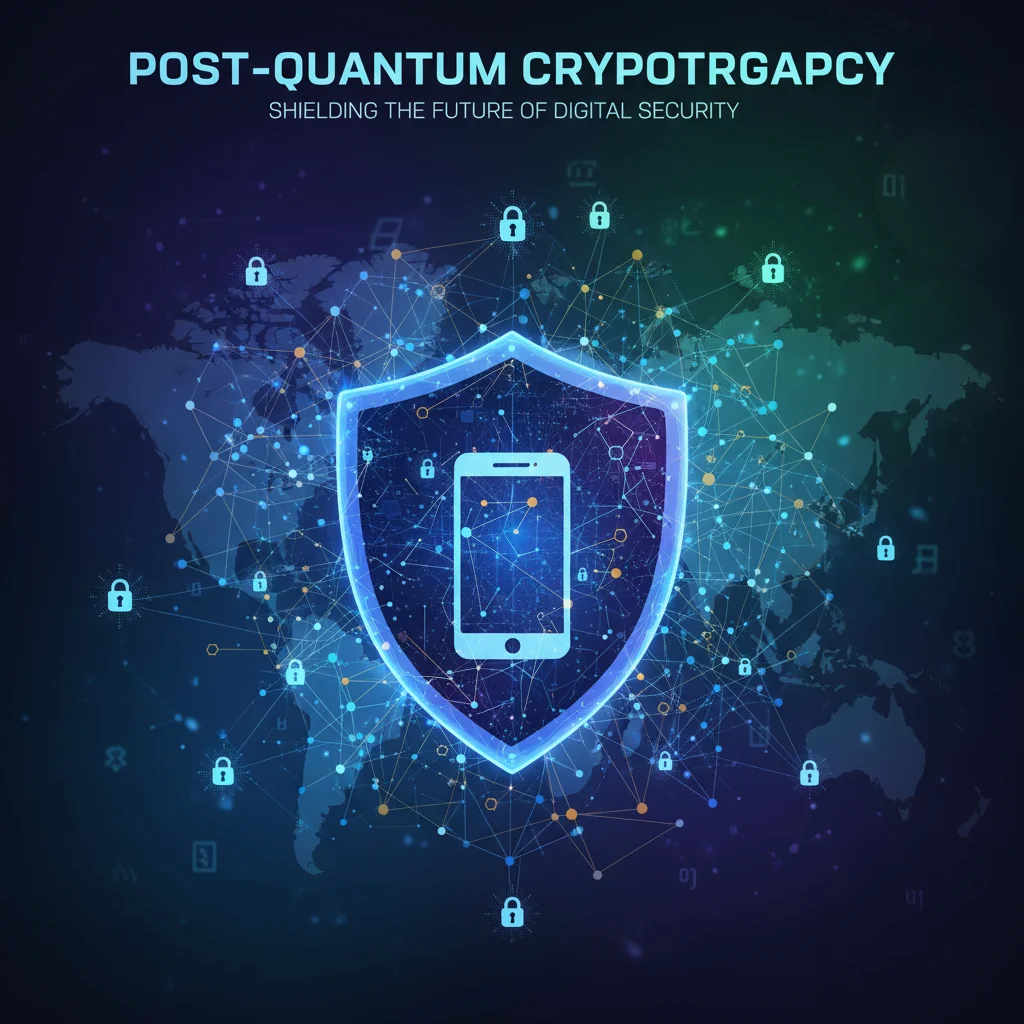
Recognizing these looming threats, cryptographers worldwide are actively developing new cryptographic algorithms that are resistant to attacks from both classical and quantum computers. This field is known as Post-Quantum Cryptography (PQC). The goal of PQC is to design cryptographic schemes that are computationally difficult for even the most powerful quantum computers to break, ensuring the continued security of digital communications and data.
NIST’s Standardization Efforts
The National Institute of Standards and Technology (NIST) in the US has been at the forefront of PQC research and standardization. Since 2016, NIST has been running a multi-round competition to identify and standardize quantum-resistant cryptographic algorithms. By 2026, we can expect several PQC algorithms to be standardized and ready for widespread adoption. These new algorithms are based on different mathematical problems than current public-key cryptography, such as lattice-based cryptography, code-based cryptography, and hash-based cryptography, which are believed to be hard for quantum computers to solve.
Integrating PQC into Mobile Devices and Networks
The transition to PQC will be a monumental undertaking, requiring significant upgrades to existing infrastructure, including mobile devices, network protocols, and software applications. By 2026, US users can anticipate seeing early implementations of PQC in various mobile security components:
- Secure Communication Protocols: Messaging apps, VPNs, and secure browsing (HTTPS) will begin integrating PQC algorithms to protect data in transit.
- Mobile Operating Systems: Updates to Android and iOS will likely include support for PQC in their underlying security frameworks, affecting everything from secure boot to app sandboxing.
- Hardware Security Modules (HSMs): New generations of mobile device hardware may incorporate PQC-resistant cryptographic modules to protect keys and sensitive data at the device level.
- Digital Signatures: Software updates, app installations, and mobile banking transactions will rely on PQC-based digital signatures to ensure authenticity and prevent tampering.
This transition will not be instantaneous, but by 2026, the groundwork for a quantum-resistant mobile ecosystem will be firmly established, with early adopters and critical infrastructure already making the switch.

What US Users Need to Know and Do by 2026
While the full impact of quantum computing on mobile security might seem distant, US users need to be aware of the ongoing developments and take proactive steps to safeguard their digital lives. By 2026, a heightened awareness and adoption of certain practices will be crucial.
Stay Informed About Software Updates
One of the most important actions US users can take is to consistently update their mobile device operating systems and applications. These updates will increasingly include patches and upgrades to integrate PQC algorithms as they become standardized. Delaying updates leaves devices vulnerable to both existing and emerging quantum-related threats. Mobile operating system providers like Apple and Google are heavily invested in cybersecurity and will be at the forefront of implementing these quantum-resistant measures.
Practice Good Cyber Hygiene
Even with quantum-resistant cryptography, fundamental cybersecurity practices remain paramount. By 2026, and indeed today, US users should:
- Use Strong, Unique Passwords: While quantum computers can break encryption, they don’t directly compromise passwords unless they are used as cryptographic keys. Strong, unique passwords, ideally managed with a reputable password manager, are still essential.
- Enable Multi-Factor Authentication (MFA): MFA adds an extra layer of security, often requiring a second verification step beyond a password. This can significantly deter unauthorized access, even if a password is compromised.
- Be Wary of Phishing and Social Engineering: Human error remains a leading cause of security breaches. Quantum computing doesn’t change the effectiveness of social engineering tactics. Always be suspicious of unsolicited messages or calls asking for personal information.
- Back Up Your Data: Regularly backing up important data to secure, possibly PQC-protected, cloud storage or external drives can mitigate the impact of data loss due to any form of cyberattack.
Understand Data Longevity and Sensitivity
Consider the sensitivity and longevity of the data you transmit and store on your mobile devices. Information that needs to remain confidential for many years (e.g., medical records, legal documents, financial plans) is at higher risk from the ‘harvest now, decrypt later’ threat. By 2026, US users and organizations should prioritize securing such data with the earliest available PQC solutions. This might involve using specific PQC-enabled communication channels or storage solutions provided by forward-thinking service providers.
Impact on Specific Mobile Apps and Services
Different mobile applications and services will be affected at varying rates. Banking apps, secure messaging services, and government applications are likely to be among the first to adopt PQC, given the high sensitivity of the data they handle. Social media apps and less critical services might take longer to fully transition. US users should pay attention to announcements from their service providers regarding quantum readiness and security upgrades, especially for critical services. For instance, an email from your bank detailing their PQC migration strategy by 2026 would be a positive sign.
Challenges and the Road Ahead
The transition to a quantum-resistant mobile security landscape is not without its challenges. These include:
Performance Overhead
Many PQC algorithms are computationally more intensive and generate larger key sizes or signatures compared to their classical counterparts. This can introduce performance overheads, potentially impacting mobile device battery life, processing speed, and network bandwidth. Optimizing these algorithms for resource-constrained mobile environments will be a key focus by 2026.
Interoperability and Migration
Ensuring seamless interoperability between new PQC systems and existing classical systems during the migration period will be complex. A phased approach will be necessary, and US users might encounter situations where some services are PQC-enabled while others are not, requiring careful navigation and awareness.
Quantum Algorithm Development
The field of quantum computing is still rapidly evolving. While current PQC candidates are believed to be quantum-resistant, there’s always a possibility that new quantum algorithms could emerge that challenge these new cryptographic standards. Continuous research and agile adaptation will be crucial for maintaining long-term mobile security.
User Education and Awareness
Perhaps one of the greatest challenges is educating the general US user base about the importance of quantum mobile security. The technical complexities can be daunting, but clear communication from technology providers and cybersecurity experts will be essential to encourage widespread adoption of new security practices and tools by 2026.
The Role of Government and Industry in the US
The US government, through agencies like NIST and the National Security Agency (NSA), plays a critical role in guiding the development and adoption of PQC. Their standardization efforts provide a roadmap for industry. Furthermore, major tech companies, including mobile OS developers and chip manufacturers, are heavily investing in quantum-safe technologies. By 2026, we can expect coordinated efforts between government, industry, and academia to accelerate the transition to quantum-resistant mobile security solutions.
Legislation and Policy
The US government is also considering legislation and policies to mandate or incentivize the adoption of PQC across critical infrastructure and government agencies. This will trickle down to impact the security posture of mobile devices used by federal employees and ultimately influence the broader commercial market. Such policies could accelerate the availability of PQC-enabled devices and services for the average US user.
Research and Development Funding
Continued funding for quantum computing research and PQC development is crucial. The US is a global leader in these fields, and sustained investment will ensure that the country remains at the forefront of developing solutions to protect its citizens’ mobile security in the quantum era. This includes funding for universities and private sector innovation, fostering a robust ecosystem for quantum advancements.
Conclusion: Preparing for a Quantum-Safe Mobile Future
By 2026, quantum computing will no longer be a distant theoretical concept but a tangible force shaping the future of mobile security for US users. While the immediate threat of widespread quantum decryption might still be a few years away, the preparatory work is happening now. The ‘harvest now, decrypt later’ strategy employed by sophisticated adversaries means that data encrypted today could be compromised tomorrow. Therefore, proactive measures are not just recommended but essential.
For individuals, staying informed, diligently applying software updates, and maintaining robust cyber hygiene will be critical. For organizations, the imperative to begin migrating to Post-Quantum Cryptography is even more urgent, especially for systems handling long-lived sensitive data. The collaboration between government, industry, and the research community in the US is vital in developing and deploying these next-generation security solutions. The future of Quantum Mobile Security is being built today, and with awareness and concerted effort, US users can navigate this evolving landscape securely.
The journey to a quantum-safe mobile world is complex and ongoing. However, by understanding the challenges and embracing the solutions, US users can ensure that their mobile devices remain secure platforms for communication, commerce, and personal data in the face of the quantum revolution. The year 2026 marks a significant milestone in this transition, demanding vigilance and adaptability from everyone.